Work

LDS Quotes on Work

“The poor use of time is a close cousin of idleness. As we follow the command to “cease to be idle” (D&C 88:124), we must be sure that being busy also equates to being productive. For example, it is wonderful to have the means of instant communication quite literally at our fingertips, but let us be sure that we do not become compulsive fingertip communicators. I sense that some are trapped in a new time-consuming addiction—one that enslaves us to be constantly checking and sending social messages and thus giving the false impression of being busy and productive…There is much that is good with our easy access to communication and information. I have found it helpful to access research articles, conference talks, and ancestral records, and to receive e-mails, Facebook reminders, tweets, and texts. As good as these things are, we cannot allow them to push to one side those things of greatest importance. How sad it would be if the phone and computer, with all their sophistication, drowned out the simplicity of sincere prayer to a loving Father in Heaven. Let us be as quick to kneel as we are to text….Electronic games and cyber acquaintances are no lasting substitute for real friends who can give an encouraging hug, who can pray for us and seek after our best interest. How grateful I have been to see quorum, class, and Relief Society members rally to the support of one another. On such occasions I have better understood what the Apostle Paul meant when he said, “Ye are no more strangers and foreigners, but fellow citizens with the saints” (Ephesians 2:19).”

Ian S. Ardern  |  A Time to Prepare
Topics: , ,

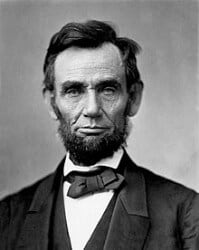
“My great concern is not whether you have failed, but whether you are content with your failure.”

Abraham Lincoln

Topics: , ,

You can’t merely snap your fingers and get great faith in God, any more than you can snap your fingers and get great musical ability. Faith takes hold of us only when we take hold of it. The great psychologist, William James, said, “That which holds our attention determines our action,” and one of the unfortunate things in life is that we sometimes focus our attention on the wrong things.

Sterling Sill  |  Conference Report, April 1955, p. 117

Topics: ,

“Christ’s arrangement with us is similar to a mom providing music lessons for her child. Mom pays the piano teacher. How many know what I am talking about? Because Mom pays the debt in full, she can turn to her child and ask for something. What is it? Practice! Does the child’s practice pay the piano teacher? No. Does the child’s practice repay Mom for paying the piano teacher? No. Practicing is how the child shows appreciation for Mom’s incredible gift. It is how he takes advantage of the amazing opportunity Mom is giving him to live his life at a higher level. Mom’s joy is found not in getting repaid but in seeing her gift used—seeing her child improve. And so she continues to call for practice, practice, practice.”

Brad Wilcox  |  His Grace is Sufficient

Topics: , ,

“Jesus doesn’t make up the difference. Jesus makes all the difference. Grace is not about filling gaps. It is about filling us.”

Brad Wilcox  |  His Grace is Sufficient

Topics: , ,

“Continuous effort – not strength or intelligence – is the key to unlocking our potential.”

Winston Churchill

Topics: , , , , ,

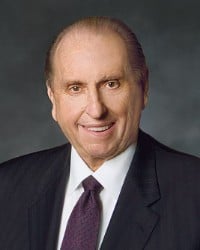
Thomas S. Monson

“[Your chosen field] should be one which will challenge your intellect and which will make maximum utilization of your talents and your capabilities. Finally, it should be a field that will supply sufficient remuneration to provide adequately for your companion and your children. Now that’s a big order. But I bear testimony that these criteria are very important in choosing your life’s work.”

Thomas S. Monson

Topics: , ,

Neal A. Maxwell Headshot

“Work is always a spiritual necessity even if, for some, work is not an economic necessity.”

Elder Neal A. Maxwell  |  “Put Your Shoulder to the Wheel”

Topics: ,

“‘Grace shall be as your day’—what an interesting phrase. We have all sung it hundreds of times, but have we stopped to consider what it means? “Grace shall be as your day”: grace shall be like a day. As dark as night may become, we can always count on the sun coming up. As dark as our trials, sins, and mistakes may appear, we can always have confidence in the grace of Jesus Christ. Do we earn a sunrise? No. Do we have to be worthy of a chance to begin again? No. We just have to accept these blessings and take advantage of them. As sure as each brand-new day, grace—the enabling power of Jesus Christ—is constant. Faithful pioneers knew they were not alone. The task ahead of them was never as great as the power behind them.”

Brad Wilcox  |  His Grace is Sufficient

Topics: , ,

“It is interesting that the first recorded instruction given to Adam after the Fall, dealt with the eternal principle of work. The Lord said: “In the sweat of thy face shalt thou eat bread.” (Gen. 3:19.) Our Heavenly Father loves us so completely that he has given us a commandment to work. This is one of the keys to eternal life. He knows that we will learn more, grow more, achieve more, serve more, and benefit more from a life of industry than from a life of ease.”

Howard W. Hunter  |  Prepare for Honorable Employment
Topics: ,

Thomas S. Monson

“In the game of life a second effort is often required. The happy life is not ushered in at any age to the sound of drums and trumpets. It grows upon us year by year, little by little, until at last we realize that we have it. It is achieved in individuals not by flights to the moon or Mars, but by a body of work done so well that we can lift our heads with assurance and look the world in the eye. Of this be sure: You do not find the happy life . . . you make it.”

Thomas S. Monson  |  “Faces and Attitudes,” New Era, September 1977

Topics: ,

“Sunday is not necessarily a day to catch up on our sleep, but to rest from things of the world, although we usually find ourselves working harder on this day than any other. But it’s a different kind of work—it’s the Lord’s work. Thus, the Sabbath is our weekly opportunity to enter into God’s presence, . . . partake of His glory, and ultimately prepare ourselves for that reality.”

Gaye Strathearn

Topics: ,

“We don’t have to work our way into grace; we have to stop working so hard to pretend we aren’t already in it”

Adam S. Miller  |  Future Mormon

Topics: ,

Nikolai Berdyaev taught the same principle:

“A false interpretation of ‘good works’ leads to a complete perversion of Christianity. ‘Good works’ are regarded not as an expression of love for God and man, not as a manifestation of the gracious source that gives life to others, but as a means of salvation and justification for oneself, as a way of realizing the abstract idea of the Good and receiving a reward in the future life. ‘Good works,’ done not for the good of others, but for the good of one’s own soul, are not good at all. Where there is no love, there is no goodness. Love does not require or expect any reward, it is reward in itself, it is a ray of paradise illuminating and transfiguring reality.”

Terryl and Fiona Givens  |  "The Christ Who Heals"

Topics: , ,

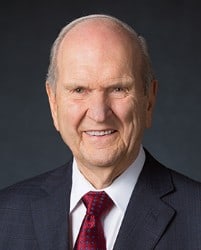
“Prepare to do work of real worth for your fellowmen. This is one of the fundamental reasons for enrollment at this institution of higher learning. The critical difference between your just hoping for good things for mankind and your being able to do good things for mankind is education.”

Russell M. Nelson  |  "Reflections and Resolution", Speeches: Brigham Young University, Jan. 7, 2004, p. 65

Topics: , ,

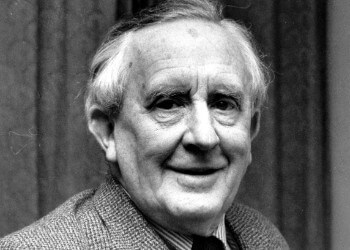
It’s the job that’s never started that takes longest to finish.

J.R.R. Tolkien

Topics: , ,

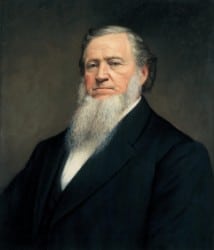
I have faith in my God, and that faith corresponds with the works I produce. I have no confidence in faith without works.

Brigham Young  |  Journal of Discourses, 4:24

Topics: ,

“Our deeds, in large measure, are children of our prayers. Having prayed, we act; our proper petitions have the effect of charting a righteous course of conduct for us.”

Bruce R. McConkie  |  “Why the Lord Ordained Prayer,” Ensign, January 1976, 12.

Topics: ,

Work, chained to its outcome, is misery. Do what you can, do it better than you’re able, and let things happen as they may. The action, not its fruit, is your business. The outcome is not your concern. If God is going to show himself to you in the work that you shoulder, he will only do so if you’ve stopped craving an approving audience and, instead, work out your own salvation.

Adam S. Miller

Topics: , ,

“During my professional career as a doctor of medicine, I was occasionally asked why I chose to do that difficult work. I responded with my opinion that the highest and noblest work in this life is that of a mother. Since that option was not available to me, I thought that caring for the sick might come close. I tried to care for my patients as compassionately and competently as mother cared for me.”

Russell M. Nelson  |  Our Sacred Duty to Honor Women

Topics: ,

What is faith? Faith is absolute confidence in that which is in absolute conformity to the will of heaven. When we combine that confidence with absolute action on our part, we have faith.

Joseph B. Wirthlin  |  “Improving our Prayers,” Ensign, March 2004, p. 27

Topics: ,

However much faith to obey God we now have, we will need to strengthen it continually and keep it refreshed constantly. We can do that by deciding now to be more quick to obey and more determined to endure. Learning to start early and to be steady are the keys to spiritual preparation. Procrastination and inconsistency are its mortal enemies.

Elder Henry B. Eyring  |  “Spiritual Preparedness: Start Early and Be Steady,” Ensign, November 2005, p. 38

Topics: , ,

“I can’t imagine pain greater than stepping across the veil and realizing I had not done what I came here to do – or realizing that I had given up my life to little or nothing, only then to find that it was gone.”

Sheri Dew  |  No Doubt About It

Topics: , ,

“At first glance at this scripture, we might think that grace is offered to us only chronologically after we have completed doing all we can do, but this is demonstrably false…“I understand the preposition ‘after’ in 2 Nephi 25:23 to be a preposition of separation rather than a preposition of time. It denotes logical separateness rather than temporal sequence. We are saved by grace ‘apart from all we can do,’ or ‘all we can do notwithstanding,’ or even ‘regardless of all we can do.’ Another acceptable paraphrase of the sense of the verse might read, ‘We are still saved by grace, after all is said and done’”

Stephen E. Robinson  |  Believing Christ

Topics: , ,

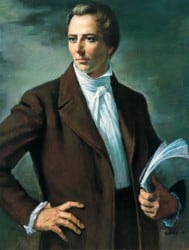
Joseph Smith Portrait

“When a man works by faith he works by mental exertion instead of physical force. It is by words, instead of exerting his physical powers, with which every being works when he works by faith. God said, ‘Let there be light: and there was light.’ . . . And the Savior says: “If you have faith as a grain of mustard seed, say tot his mountain, ‘Remove,’ and it will remove; or say to that sycamine tree, ‘Be ye plucked up, and planted in the midst of the sea,’ and it shall obey you. Faith, then works by words; and with these its mightiest works have been, and will be, performed.

Joseph Smith  |  Lectures on Faith, 72-73 — The Pearl of Great Price Student Manual, p. 7

Topics: , ,

“The majority of the revelations which are given to the children of God come when they are acting, not when they are relaxing in their habitations waiting for the Lord to tell them the first step they should make.”

Elder Dallin H. Oaks

Topics: ,

“Sincere praying implies that when we ask for any blessing or virtue, we should work for the blessing and cultivate the virtue.”

David O. McKay  |  Secrets of a Happy Life, 114–15.

Topics: , , ,

“Some of our most important choices concern family activities. May breadwinners worry that their occupations leave too little time for their families. Here is no easy formula for that contest of priorities. However, I have never known of a man who looked back on his working life and said, “I just didn’t spend enough time with my job.”

Elder Dallin H. Oaks  |  "Good, Better, Best"

Topics: , , ,

“There are two ways of evolving: deliberately and accidentally. You can either decide who you want to become and deliberately work toward that end, or you can just go with the flow and become whatever life makes of you. In that event, you will become whatever the fickle circumstances and forces of life and society will make of you; whatever is currently considered to be popular or in; whatever is easiest. But, whatever you become accidentally it will not be nearly the full measure of our potential. You will become just someone, somewhere in the middle.”

Lawrence Corbridge  |  “The Fourth Missionary”

Topics: ,

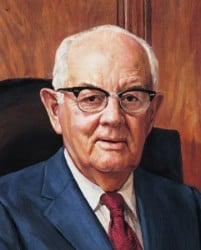
Spencer W. Kimball Portrait

[The Lord] asks us to rest from daily work. This means we should perform no labor that would keep us from giving our full attention to spiritual matters. The Lord told the Israelites, “thou shalt not do any work, thou, nor thy son, nor thy daughter, they manservant, nor thy maidservant, nor the cattle” (Exodus 20:10). Our prophets have told us that we should not shop, hunt, fish, attend sports events, or participate in similar activities on that day.

President Spencer W. Kimball cautioned, however, that if we merely lounge about doing nothing on the Sabbath, we are not keeping the day holy. The Sabbath calls for constructive thoughts and acts.

Spencer W. Kimball  |  (See Teachings of Presidents of the Church: Spencer W. Kimball [2006], p. 170) — Gospel Principles, p. 141

Topics: ,

“If you don’t like something, change it. If you can’t change it, change your attitude.”

Maya Angelou

Topics: , ,

“Work on the projects ahead, and when you have taken one step in the acquiring of faith, it will give you the assurance in your soul that you can go forward and take the next step, and by degrees your power or influence will increase until eventually, in this world or the next, you will say to the Mt. Zerin’s [see Ether 12:30] in your life, “Be thou removed.” You will say to whatever encumbers your course of eternal progress, “Depart,” and it will be so”

Bruce R. McConkie  |  "Lord, Increase Our Faith,” BYU Speeches of the Year, October 1967, p. 11

Topics: , ,

“Start your work from where you live, with the small concrete needs right around you. Help ease tension in your workplace. Help feed the person right in front of you. Personalism holds that we each have a deep personal obligation to live simply, to look after the needs of our brothers and sisters, and to share in the happiness and misery they are suffering.”

David Brooks  |  The Road to Character

Topics: ,

Thomas S. Monson

“I hope that you are not afraid of tough classes. I never did have a ‘cinch’ class. … You simply have to apply yourself. I hope that you want to be so well equipped that you can compete in this competitive world. I hope that you will learn to take responsibility for your decisions, whether they be in your courses of study which you elect to take, or whether they be in the direction of the academic attainments which you strive to achieve.

“My young brothers and sisters, don’t take counsel of your fears. Don’t say to yourselves, ‘I’m not wise enough, or I can’t apply myself sufficiently well to study this difficult subject or in this difficult field, so I shall choose the easier way.’ I plead with you to tax your talent, and our Heavenly Father will make you equal to those decisions.”

Thomas S. Monson

Topics: ,

“I have been impressed with the urgency of doing. Knowing is not enough; we must apply. Being willing is not enough; we must do.”

Leonardo da Vinci

Topics: , ,

Joseph Smith Portrait

“The Lord gave us power in proportion to the work to be done, and strength according to the race set before us, and grace and help as our needs required.”

Joseph Smith  |  History of the Church of Jesus Christ of Latter-day Saints

Topics: ,

Get on your knees and pray, then get on your feet and work.

Gordon B. Hinckley

Topics: ,

“[While discussing the debate between faith and works] “It does seem to me like asking which blade in a pair of scissors is most necessary.”

CS Lewis  |  Mere Christianity

Topics: , ,

“Real courage is when you know you’re licked before you begin, but you begin anyway and see it through no matter what.”

Harper Lee  |  To Kill a Mockingbird

Topics: , ,

“LDS artists must earn inspiration, just as other artists have. . . . It doesn’t come just because artists are members of the LDS church, they still must work for it.”

Boyd K. Packer  |  “Art Is Uplifting,” 4

Topics: ,

“Knowledge without labor is profitless. Knowledge with labor is genius.”

Gordon B. Hinckley  |  Stand a Little Taller

Topics: ,

“One of my favorite newspaper columnists is Jenkin Lloyd Jones. In a recent article published in the News, he commented: ‘There seems to be a superstition among many thousands of our young who hold hands and smooch in the drive-ins that marriage is a cottage surrounded by perpetual hollyhocks, to which a perpetually young and handsome husband comes home to a perpetually young and ravishing wife. When the hollyhocks wither and boredom and bills appear, the divorce courts are jammed. Anyone who imagines that bliss is normal is going to waste a lot of time running around shouting that he’s been robbed. The fact is that most putts don’t drop. Most beef is tough. Most children grow up to be just ordinary people. Most successful marriages require a high degree of mutual toleration. Most jobs are more often dull than otherwise. …Life is like an old-time rail journey — delays, sidetracks, smoke, dust, cinders, and jolts, interspersed only occasionally by beautiful vistas and thrilling bursts of speed. The trick is to thank the Lord for letting you have the ride.’”

Gordon B. Hinckley  |  God Shall Give unto You Knowledge by His Holy Spirit

Topics: , , ,

When faith springs up in the heart, good works follow, and good works will increase that pure faith within them.

Brigham Young  |  Journal of Discourses, 3:155

Topics: ,

“Willingness to experience difficult thoughts, feelings, and experiences is put in the service of our values. This is what makes willingness different from wallowing”

Luoma, J. B., Hayes  |  S. C., & Walser, R. D. (2007). Learning ACT: An acceptance & commitment therapy skills-training manual for therapists. Oakland, CA: New Harbinger Publications.

Topics: , , ,

If the people will only be full of good works, I will insure that they will have faith in time of need.

Brigham Young  |  Journal of Discourses, 3:154

Topics: ,

“We exercise appropriate faith in our Master by involving ourselves in the work of the Master”

Robert Millet  |  By Grace Are We Saved. Salt Lake City: Bookcraft, 1989.

Topics: , ,

Neal A. Maxwell Headshot

“True faith is not to be brought about by overwhelming and intimidating intervention from God”

Elder Neal A. Maxwell  |  “Not My Will, But Thine.” Salt Lake City: Bookcraft, 1988.

Topics: , ,

Neal A. Maxwell Headshot

“Real hope is much more than wishful musing. Hope is realistic anticipation taking the form of determination – a determination not merely to survive but to “endure . . . well” to the end. In the geometry of restored theology, hope has a greater circumference than faith. If faith increases, the perimeter of hope stretches correspondingly. Hope keeps us “anxiously engaged” in good causes even when these appear to be losing causes. Those with true hope often see their personal circumstances shaken, like kaleidoscopes, again and again. Yet with the “eye of faith,” they still see divine pattern and purpose. Whatever our particular furrow, we are to “plow in hope,” without looking back or letting yesterday hold tomorrow hostage.”

Elder Neal A. Maxwell  |  Ensign, November 1994

Topics: , ,

“I do in some small degree participate in the grace that saved me.”

Marilynne Robinson

Topics: ,

“We are poor in character when we think getting by is a substitute for doing our best.”

J. Reuben Clark

Topics: , ,