“[Smartphones] need to be our servants, not our masters. For example, if later tonight you share inspiring thoughts from this devotional on social media, your smartphone is a servant. If you randomly surf the Internet, your smartphone is a master.”

LDS Quotes on Agency
“[Smartphones] need to be our servants, not our masters. For example, if later tonight you share inspiring thoughts from this devotional on social media, your smartphone is a servant. If you randomly surf the Internet, your smartphone is a master.”
“Adam and Eve’s fall wasn’t down, rather, as I have heard it expressed, they fell forward.”
“It has been said by one, years ago, that history turns on small hinges, and so do people’s lives. Our lives will depend upon the decisions which we make—for decisions determine destiny.”
| "Decisions Determine Destiny"
“Don’t tell people how to do things, tell them what to do and let them surprise you with their results.”
“God rarely infringes on the agency of any of His children by intervening against some for the relief of others. But He does ease the burdens of our afflictions and strengthen us to bear them…Through all mortal opposition, we have God’s assurance that He will ‘consecrate [our] afflictions for [our] gain’ (2 Nephi 2:2).”
“The Master could overwhelm us with his supernal knowledge, but he does not. He honors our agency. He allows us the joy of discovery.”
| “Gratitude for the Mission and Ministry of Jesus Christ,” BYU Education Week Devotional Address, BYU Speeches
“We want a script, and we find we stand before a blank canvas. We expect a road map, and we find we have only a compass. We have yet to learn, as the poet John Ciardi wrote, that ‘clean white paper, waiting under a pen, is a gift beyond human history and hurt and heaven.”

“…we can choose to see commandments as limitations. We may feel at times that God’s laws restrict our personal freedom, take from us our agency, and limit our growth. But as we seek for greater understanding, as we allow our Father to teach us, we will begin to see that His laws are a manifestation of His love for us and obedience to His laws is an expression of our love for Him.”
| "If Ye Love Me, Keep My Commandments,” 2015 General Conference
“As Joseph reminded his followers, ‘I believe that God foreknew everything, but did not foreordain everything.’ Exaltation, is within the reach of all, even if the journey toward that divine end is fraught with suffering. If we had insurance against a painful journey, one-third of the heavenly hosts would not have abandoned the enterprise. The risks are real. Or, in the language of the Book of Mormon, we cannot assume that our afflictions come from God, but we can know that ‘God shall consecrate [our] afflictions for [our] gain.'”
“For where it is in our power to act, it is also in our power not to act.”
| Complete Works of Aristotle, Volume 2
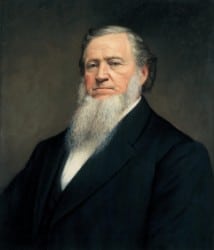
“The volition of [man] is free; this is a law of their existence, and the Lord cannot violate his own law; were he to do that, he would cease to be God. … This is a law which has always existed from all eternity, and will continue to exist throughout all the eternities to come. Every intelligent being must have the power of choice.”
| In Journal of Discourses, 11:272.
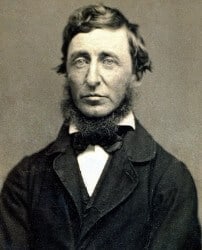
“If you would convince a man that he does wrong, do right. But do not care to convince him. Men will believe what they see. Let them see.”
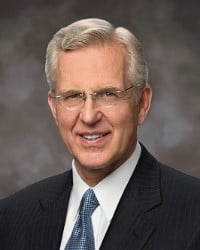
“By ‘moral discipline,’ I mean self-discipline based on moral standards. Moral discipline is the consistent exercise of agency to choose the right because it is right, even when it is hard. It rejects the self-absorbed life in favor of developing character worthy of respect and true greatness through Christlike service.”
| "Moral Discipline," Conference October 2009
“Exercising agency in a setting that sometimes includes opposition and hardship is what makes life more than a simple multiple-choice test. God is interested in what we are becoming as a result of our choices. He is not satisfied if our exercise of moral agency is simply a robotic effort at keeping some rules. Our Savior wants us to become something, not just do some things. He is endeavoring to make us independently strong – more able to act for ourselves than perhaps those of any prior generation. We must be righteous, even when He withdraws His Spirit, or, as President Brigham Young said, even ‘in the dark.’”
| “Moral Agency,” Ensign, June 2009, p. 53
“Truly God loves us, and because He loves us, he neither compels or abandons us. Rather, he helps us and guides us. Indeed, the real manifestation of God’s love is His commandments.”
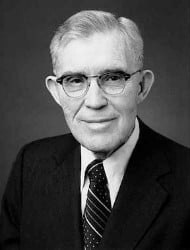
“Agency is a God-given right to choose between good and evil. It is not a right to do anything you please, anytime, for any purpose. Choose between good and evil, right and wrong, truth and error. If I choose, I take the consequences of the choice, for the law works either way. If I choose good, then the spirit of the Lord will be ready to inspire me to fill me with love. If I choose evil, I place myself under the influence of Satan and his helpers and his spirits; I forfeit the influence of good. And as I progress further into the evil, the light of Christ which lightens all men fades away. But my right to choose and to keep on choosing is mine continually. I can turn at any time and reverse myself. I can turn toward good if evil, or I can turn toward evil if good.”
| “The Key to Faith,” BYU Devotional, July 1, 1969, pp. 2-3
“Had agency come to man without the Atonement, it would have been a fatal gift.”
| "Atonement, Agency, Accountability," Conference April 1988
“Generally our Heavenly Father will not interfere with the agency of another person unless He has a greater purpose for that individual. Two examples come to mind: Saul, who became the Apostle Paul, and Alma the Younger. Both these men were deterred from their unrighteous objective of persecuting and trying to destroy the church of God. Both became great missionaries for the Church. But even as the Lord intervened, they were given choices. Alma, for example, was told, ‘If thou wilt be destroyed of thyself, seek no more to destroy the church of God.’”
| “Know He Is There,” Ensign, February 1994, p. 54

“I have learned an important lesson. Yes, God can make some good come from evil. But even He, in all His majesty, won’t make the evil go away. Men are free. He won’t control them. There is wickedness in this world.”
| My Story: Elizabeth Smart
“You are right now the sum total of what you have thought, said, seen, heard and done. What you think, say, do, hear and see, cause you to change; to change for good or evil; to become either stronger or weaker; to either internalize the qualities of light or the qualities of darkness. You are responsible for who you are and you are responsible for who you will become.”
| “The Fourth Missionary”
“The history of free men is never really written by chance but by choice; their choice!”
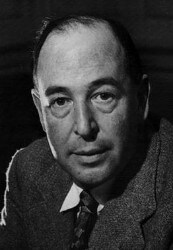
“The more often [one] feels without acting, the less [one] will be able ever to act, and, in the long run, the less [he or she] will be able to feel.”
| The Screwtape Letters (New York: Macmillan, 1966), 61.
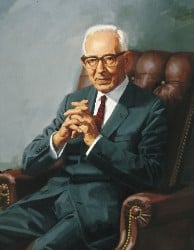
“I have heard people say, and members of the Church too, ‘I have a right to do as I please.’ My answer is: No, you do not. You haven’t any right at all to do just as you please. There is only one right that you have, and that is to do just what I read to you: keep the commandments of Jesus Christ. He has a perfect right to tell us so. We have no right to refuse. I do not care who the man is; I do not care where he lives, or what he is – when the gospel of Jesus Christ is presented to him, he has no right to refuse to receive it. He has the privilege. He is not compelled to receive it, because our Father in heaven has given to everyone of us, in the Church and out, the gift of free agency. That free agency gives us the privilege to accept and be loyal to our Lord’s commandments, but it has never given us the right to reject them. Every man who rejects the commandments of our Father in heaven is rebellious.”
| Conference Report, April 1967, pp. 120-21
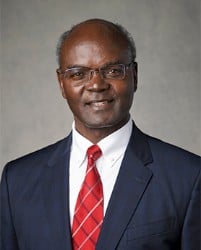
“I have seen the good fruit of the gospel blossom in my home continent of Africa. … In the doctrines and principles of the restored gospel, many are finding a sure anchor for their faith. Families uprooted from their rural communities in search of a better future in the towns and cities have found a new way to hold on to the strong family traditions which have come progressively under attack in this era of globalization. The Spirit of the Lord is moving powerfully among the people. A new celestial culture is developing in homes, nurtured by the ready hearkening to the counsel of the living prophet to have daily prayer and scripture study and to meet once a week as a family in home evening. As a result, many are able to break free from the shackles of traditions that restrict the exercise of their agency.”
| “Blessings of the Gospel Available to All”
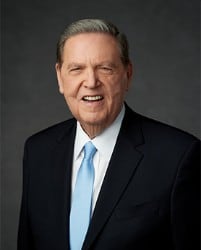
“The future of this world has long been declared; the final outcome between good and evil is already known. There is absolutely no question as to who wins because the victory has already been posted on the scoreboard. The only really strange thing in all of this is that we are still down here on the field trying to decide which team’s jersey we want to wear!”
| "We Are All Enlisted," Conference October 2011
“The old saying ‘The Lord is voting for me, and Lucifer is voting against me, but it is my vote that counts’ describes a doctrinal certainty that our agency is more powerful than the adversary’s will. Agency is precious. We can foolishly, blindly give it away, but it cannot be forcibly taken from us.
“There is also an age-old excuse: ‘The devil made me do it.’ Not so! He can deceive you and mislead you, but he does not have the power to force you or anyone else to transgress or to keep you in transgression.”
| “Cleansing the Inner Vessel”
“Our faith in God must be strong, therefore, not only in behalf of ourselves and our own trials, but also upon seeing those human conditions involving human wickedness which are truly wrenching but which are permitted by God because of God-given but morally misused agency.”
Had agency come to man without the Atonement, it would have been a fatal gift.
Thus, faith in Christ leads to righteous action, which increases our spiritual capacity and power. Understanding that faith is a principle of action and of power inspires us to exercise our moral agency in compliance with gospel truth, invites the redeeming and strengthening powers of the Savior’s Atonement into our lives, and enlarges the power within us whereby we are agents unto ourselves (see D&C 58:28).
| “Ask in Faith,” Ensign, May 2008, p. 95
“The highest challenge we have in mortality is to use our free agency well, making right choices in the interplay of time and talents. Time is one of the blessings we are given. Generally speaking, it is we who let ourselves get fragmented too much. It is the result of not establishing (and then persisting in) certain priorities in our life. I am not denying the reality of the challenge you put, but neither do I think it is unmanageable.”
| Deposition of a Disciple, 68
“Men and women who turn their lives over to God will find out that he can make a lot more out of their lives than they can. He will deepen their joys, expand their vision, quicken their minds, strengthen their muscles, lift their spirits, multiply their blessings, increase their opportunities, comfort their souls, raise up friends, and pour out peace.”
| The Teachings of Ezra Taft Benson, p. 361
“Life offers you two precious gifts. One is time, the other, freedom of choice—the freedom to buy with your time what you will. You are free to exchange your allotment of time for thrills. You may trade it for base desires. You may invest it in greed. You may purchase with it vanity; you may spend your time in pursuit of material things. Yours is the freedom to choose. But these are not bargains, for in them you find no lasting satisfaction.”
“What are the three most important decisions? First, what will be my faith? Second, whom shall I marry? Third, what will be my life’s work?”
| "Decisions Determine Destiny"
“Education is yours to obtain. No one else can fain it for you. Wherever you are, develop a deep desire to learn.”
“Let us educate ourselves. Light is not the absence of darkness; rather, darkness is the absence of light. Light and truth exist independently. This being the case, the more light we have, the more independent we are, and the freer we are to choose. With truth lighting the way, we are able to see and make choices we otherwise couldn’t make.”
Exercising agency in a setting that sometimes includes opposition and hardship is what makes life more than a simple multiple-choice test. God is interested in what we are becoming as a result of our choices. He is not satisfied if our exercise of moral agency is simply a robotic effort at keeping some rules. Our Savior wants us to become something, not just do some things. He is endeavoring to make us independently strong – more able to act for ourselves than perhaps those of any prior generation. We must be righteous, even when He withdraws His Spirit, or, as President Brigham Young said, even “in the dark.”
| “Moral Agency” Ensign, June 2009, p. 53
“You have agency, and you are free to choose. But there is actually no free agency. Agency has its price. You have to pay the consequences of your choices.”
| On the Wings of Eagles, BYU Devotional, July 2006

“Do the best you can until you know better. Then when you know better, do better.”
“We must reject the idea that every time a law’s broken, society is guilty rather than the lawbreaker. It is time to restore the American precept that each individual is accountable for his actions.”
“The earth did not come by chance nor by accident. It is the result of a creation that is based on purpose, on agency, on choice. It accords with laws which were in force long before the plan was every laid down. All of it has order; all of it was planned for us. The beauty and precision of the universe, the endless variety of plant and animal life—all testify of a plan and a creator.”
| The Earth Shall Teach Thee, 12.
“To fully understand this gift of agency and its inestimable worth, it is imperative that we understand that God’s chief way of acting is by persuasion and patience and long-suffering, not by coercion and stark confrontation. He acts by gentle solicitation and by sweet enticement. He always acts with unfailing respect for the freedom and independence that we possess. He wants to help us and pleads for the chance to assist us, but he will not do so in violation of our agency. He loves us too much to do that, and doing so would run counter to his divine character. . . .To countermand and ultimately forbid our choices was Satan’s way, not God’s, and the Father of us all simply never will do that. He will, however, stand by us forever to help us see the right path, find the right choice, respond to the true voice, and feel the influence of his undeniable Spirit. His gentle, peaceful, powerful persuasion to do right and find joy will be with us ‘so long as time shall last, or the earth shall stand, or there shall be one man upon the face thereof to be saved’ (Moroni 7:36).”
| “The Golden Thread of Choice,” Ensign, Nov. 1989, p. 18
“Had agency come to man without the Atonement, it would have been a fatal gift.”
“God is pervasively and lovingly in the details of things, yet does not constrict our moral agency in any way. Rather, in his perfect love and awareness, he pays perfect and strict attention to details. And his influence is felt in many ways that are quite remarkable even in what seem to be the smallest of life’s episodes. Why should we be surprised? Has he not told us that a hair shall not fall from the head unnoticed or a sparrow fall from the air? His divine attention is clearly far beyond our comprehension. But it is nevertheless a reality of which he has reassured us.”
“In striving for ultimate submission, our wills constitute all we really have to give God anyway. The usual gifts and their derivatives we give to him could be stamped justifiably “Return to Sender,” with a capital S. Even when God receives this one gift in return, the fully faithful will receive “all that [He] hath.” (D&C 84:38) What an exchange rate!”
| “Consecrate Thy Performance,” Ensign, May 2002, p. 36
“Everything can be taken from a man but one thing: the last of the human freedoms–to choose one’s attitude in any given set of circumstances, to choose one’s own way.”
| Man's Search for Meaning
“Critical to our knowledge of the plan of happiness is an understanding of the great governing principle of agency.”
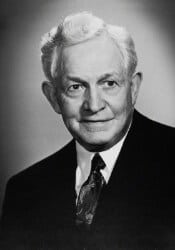
“Next to the bestowal of life itself, the right to direct that life is God’s greatest gift to man. . . . Freedom of choice is more to be treasured than any possession earth can give. It is inherent in the spirit of man. It is a divine gift to every normal being. . . . Everyone has this most precious of all life’s endowments – the gift of free agency – man’s inherited and inalienable right.”
| Improvement Era, Feb. 1962, p. 86
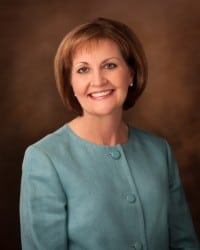
“As we consider his incomprehensible suffering for us, surely among the saddest five words our Savior ever uttered were these: ‘Will ye also go away?’ When times are difficult, we can make the choice to turn away from him and struggle through our afflictions alone, or we can make the choice to turn to him and the Father’s plan, finding that we will ‘suffer no manner of afflictions, save it were swallowed up in the joy of Christ.’ My prayer for each of us is to accept the invitation of the sacred Christmas hymn to ‘come, let us adore him’ and our Heavenly Father for his glorious and perfect plan!”
| "Oh, Come, Let Us Adore Him—the Plan!"