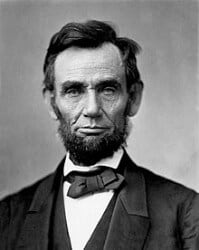
“Sir, my concern is not whether God is on our side; my greatest concern is to be on God’s side, for God is always right.”

LDS Quotes on Character
“Sir, my concern is not whether God is on our side; my greatest concern is to be on God’s side, for God is always right.”
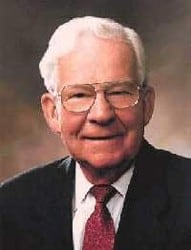
“The best and most clear indicator that we are progressing spiritually and coming unto Christ is the way we treat other people.”

It’s really a wonder that I haven’t dropped all my ideals, because they seem so absurd and impossible to carry out. Yet I keep them, because in spite of everything, I still believe that people are really good at heart.
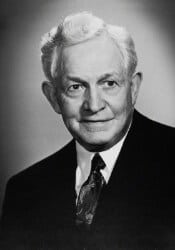
“Character is the aim of true education; and science, history, and literature are but means used to accomplish the desired end. Character is not the result of chance work but of continuous right thinking and right acting. . . . True education seeks, then to make men and women not only good mathematicians, proficient linguists, profound scientists, or brilliant literary lights, but also honest men, combined with virtue, temperance, and brotherly love — men and women who prize truth, justice, wisdom, benevolence, and self-control as the choicest acquisitions of a successful life. . . It is regrettable, not to say deplorable, that modern education so little emphasizes these fundamental elements of true character. The principal aim of many of our schools and colleges seems to be to give the students purely intellectual attainments and to give but passing regard to the nobler and more necessary development along moral lines.”
| Gospel Ideals p. 440-441
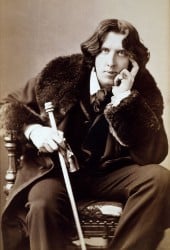
Those who find ugly meanings in beautiful things are corrupt without being charming. This is a fault. Those who find beautiful meanings in beautiful things are the cultivated. For these there is hope. They are the elect to whom beautiful things mean only Beauty. There is no such thing as a moral or an immoral book. Books are well written, or badly written. That is all.
“The gift of the Holy Ghost … quickens all the intellectual faculties, increases, enlarges, expands and purifies all the natural passions and affections; and adapts them, by the gift of wisdom, to their lawful use. It inspires, develops, cultivates and matures all the fine-toned sympathies, joys, tastes, kindred feelings, and affections of our nature. It inspires virtue, kindness, goodness, tenderness, gentleness, and charity. It develops beauty of person, form and features. It tends to health, vigor, animation, and social feeling. It invigorates all the faculties of the physical and intellectual man. It strengthens, and gives tone to the nerves. In short, it is, as it were, marrow to the bone, joy to the heart, light to the eyes, music to the ears, and life to the whole being”
“Courage is the most important of all the virtues because without courage, you can’t practice any other virtue consistently.”
Three things are necessary in order that any rational and intelligent being may exercise faith in God unto life and salvation. First, the idea that he actually exists. Secondly, a correct idea of his character, perfections, and attributes. Thirdly, an actual knowledge that the course of life which he is pursuing is according to His will.
| Lectures on Faith 3:2-5
“The best index to a person’s character is how he treats people who can’t do him any good, and how he treats people who can’t fight back.”
“Righteous character is more valuable than any material object you own, any knowledge you have gained through study, or any goals you have attained, no matter how well lauded by mankind. In the next life your righteous character will be evaluated to assess how well you used the privilege of mortality.”
“The tongue is the mirror of the soul. Spoken words reveal the intents, desires, and feelings of the heart. We shall give an account before the judgment bar for every spoken word, and shall be condemned for our idle, intemperate, profane, and false words. Implicit in this principle of judgment is the fact that we can control what we say. And what better test can there be of a godly self-control than the ability to tame the tongue!”
| Doctrinal New Testament Commentary, Vol. 3: Colossians-Revelation (Salt Lake City: Deseret Book, 1994), 262.
“Be grateful, be smart, be clean, be true, be humble, be prayerful.”
| Way To Be!: 9 Rules For Living The Good Life
“The great Mediator asks for our repentance not because we must ‘repay’ him in exchange for his paying our debt to justice, but because repentance initiates a developmental process that, with the Savior’s help, leads us along the path to a saintly character”
| The Broken Heart [Salt Lake City: Deseret Book, 1989], 149;
“All of man’s miseries come from his incapacity to sit alone in an empty, quiet room.”
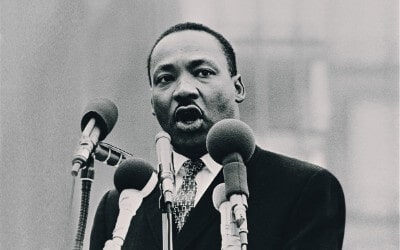
There comes a time when one must take a position that is neither safe, nor politic, nor popular, but he must take it because conscience tells him it is right.
| A Testament of Hope: The Essential Writings and Speeches
“We may be quite sure that Christ-centeredness and Christ-likeness will never be attained by our own unaided efforts. How can self drive out self? We could as well expect Satan to drive out Satan. We’re not interested in skin-deep holiness and a merely external resemblance to Jesus Christ. We’re not satisfied by a superficial modification of behavior patterns in conformity to some Christian subculture which expects this, commands that, and prohibits the other. No, what we long for is a deep inward change of character resulting from a change of nature and leading to a radical change of conduct. In a word, we want to be like Christ, and that thoroughly, profoundly, entirely. Nothing less than that will do.”
| 1992 CES Symposium at BYU
“Faith and character are intimately related, Faith is the power of obedience to the commandments of God will forge strength of character available to you in times of urgent need. Such character is not developed in moments of great challenge or temptation. That is when it is intended to be used. You will discover how faith and character interact to strengthen one another. Character is woven patiently from threads of applied principle, doctrine, and obedience.”
| The Transforming Power of Faith and Character, Conference October 2010
“In time, one who makes decisions based upon circumstance is virtually assured to commit serious transgressions. There is no iron rod of truth to keep that person in the right way. He will continually be faced with many subtle temptations to make deviations from the commandments. Those choices are justified by arguing that they are not that bad, that they are more socially acceptable and provide a broader base of friends. A clever individual without foundation principles can at times acquire, temporarily, impressive accomplishments. Yet that attainment is like a sand castle. When the test of character comes, it crumbles, often taking others with it.
“The second pattern, making decisions based upon eternal truth, is the pattern of the Lord. It will always lead you to make decisions guided by His plan of happiness. Such decisions are centered in doing what is right, not in first deciding the result desired. Choosing to do what the Lord has defined as right will, in the long run, always lead to the best outcomes. However, that pattern may require you to set aside something you very much desire now for a greater future good.”
| "The Power of Righteousness"
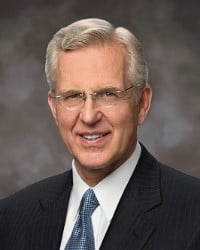
“By ‘moral discipline,’ I mean self-discipline based on moral standards. Moral discipline is the consistent exercise of agency to choose the right because it is right, even when it is hard. It rejects the self-absorbed life in favor of developing character worthy of respect and true greatness through Christlike service.”
| "Moral Discipline," Conference October 2009
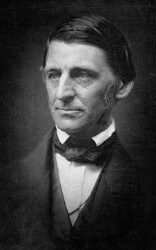
“People do not seem to realize that their opinion of the world is also a confession of their character.”
You cannot be passive in life, or in time the natural man will undermine your efforts to live worthily. You become what you do and what you think about. Lack of character leads one under pressure to satisfy appetite or seek personal gain.”
“Exercising agency in a setting that sometimes includes opposition and hardship is what makes life more than a simple multiple-choice test. God is interested in what we are becoming as a result of our choices. He is not satisfied if our exercise of moral agency is simply a robotic effort at keeping some rules. Our Savior wants us to become something, not just do some things. He is endeavoring to make us independently strong – more able to act for ourselves than perhaps those of any prior generation. We must be righteous, even when He withdraws His Spirit, or, as President Brigham Young said, even ‘in the dark.’”
| “Moral Agency,” Ensign, June 2009, p. 53
“Nothing is at last sacred but the integrity of your mind.”
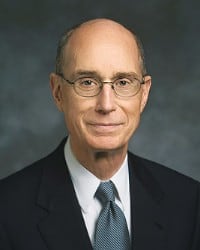
“It is hard to know when we have done enough for the Atonement to change our natures and so qualify us for eternal life. And we don’t know how many days we will have to give the service necessary for that mighty change to come. But we know that we will have days enough if only we don’t waste them.”
| "This Day," Conference April 2007
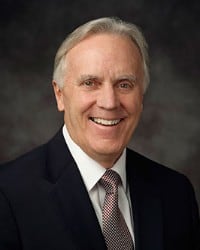
“To believe that weaknesses and deficiencies in your character are unchangeable is to reject the central truth of the plan of salvation. You are not cast in stone. You not only can change but you do change all of the time. You are a dynamic, changing, evolving being. You are always changing. You never stay the same. You cannot stand still.”
| "The Fourth Missionary"
The man who cannot listen to an argument which opposes his views either has a weak position or is a weak defender of it. No opinion that cannot stand discussion or criticism is worth holding. And it has been wisely said that the man who knows only half of any question is worse off than the man who knows nothing of it. He is not only one sided, but his partisanship soon turns him into an intolerant and a fanatic. In general it is true that nothing which cannot stand up under discussion and criticism is worth defending.
“The home … is the workshop where human characters are built and the manner in which they are formed depends upon the relationship existing between parents and the children. The home cannot be what it should be unless these relationships are of the proper character. Whether they are so or not depends, it is true, upon both parents and children, but much more upon parents. They must do their best.”
“That which dominates our imaginations and our thoughts will determine our lives and our character. What we are worshipping we are becoming.”
“A good character is something you must make for yourself. It cannot be inherited from parents. It cannot be created by having extraordinary advantages. It isn’t a gift of birth, wealth, talent, or station. It is the result of your own endeavor. It is the reward that comes from living good principles and manifesting a virtuous and honorable life.”
| "The Tradition of a Balanced, Righteous Life", August 2011 Ensign
“I suspect that you and I are much more familiar with the redeeming power of the Atonement and not as associated with the enabling power of the Atonement. The Atonement is also for saints. I don’t think many of us get it. We mistakenly think that we have to make the journey from good to better all by ourselves. Individuals through faith in the Atonement receive strength and power to do good works that they could not do otherwise.”
| "The Atonement and the Journey of Mortality"
“Nearly all men can stand adversity, but if you want to test a man’s character, give him power.”
“Perhaps the surest test of an individual’s integrity is his refusal to do or say anything that would damage his self-respect.”
“One of the most powerful sources of personal development will come through the urgent prayers you offer in faith for a foundation of righteousness. You will learn much as feelings distill in your mind and heart. Avoid prayers that appear to be a set of instructions to the Lord – do this, bless that, change this, help me with that. Rather, be a compliant student to the Ultimate Teacher. He wants you to succeed even more than you do yourself.”
| BYU Devotional
“Reformation of the world begins with reformation of self. We cannot hope to influence others in the direction of moral virtue unless we live lives of virtue. The example of our virtuous living will carry a greater influence than will all the preaching, postulating, and theorizing in which we might indulge. We cannot expect to lift others unless we are standing on higher ground.”
| Standing for Something: 10 Neglected Virtues That Will Heal Our Hearts and Homes
“The decisions we make, individually and personally, become the fabric of our lives. That fabric will be beautiful or ugly according to the threads of which it is woven. I wish to say particularly to the young men who are here that you cannot indulge in any unbecoming behavior without injury to the beauty of the fabric of your lives. Immoral acts of any kind will introduce an ugly thread. Dishonesty of any kind will create a blemish. Foul and profane language will rob the pattern of its beauty.”
| "This Work Is Concerned with People," Conference, April 1995
“Let me spend a moment on an item that I think a great many people, particularly members of the Church, do not understand. A lot of our people–including a lot of you–have great amounts of faith but sometimes tend to distort that faith a little by saying, “I am not going to move until I receive a positive assurance”–a burning in the bosom, as it were–“that that is the right thing to do.”
“You are all familiar with the scripture where Oliver Cowdery was trying to translate and could not do it. The Lord explained that Oliver had to figure it out himself, and if it was right He would give him a burning in his bosom; and if it was wrong he would have a stupor of thought. Many people say, “I am not going to move because I do not have that burning in my bosom. I am not positive about this, that, or the other . . . .” Too often we want to be positive about everything. We feel that we need to have this burning all the time. Often people say, “I am confused. I don’t know what to do”–and so they end up treading water and not doing anything, not making any real progress–and that, in and of itself, is a great sin. We should not do things wrong–and, as I said before, the Lord will let you know when things are wrong–but, for heaven’s sake, we should do something! This lengthening of our stride and quickening of our pace about which our modern-day prophet, the Lord’s spokesman, talks so much cannot happen if we are standing still. We must be moving, and we should be moving in the right direction.
“Let me tell what I have discovered–and this is somewhat repetitious. I do not say that we will not get that burning in our bosom, for we will when it is the right thing. In my life there have been quite a few occasions where there was absolutely no question about it–that burning was there. For instance, I have had the experience of installing stake presidents when there was absolutely no question, when I was positive that “that is the man to be the stake president now.” It has happened in other situations also, but generally it has worked the other way–that is by eliminating the wrong directions to reveal the right direction, especially concerning our opportunities for progress in life in what we often term the temporal sense. We must try to figure it out ourselves. In the past I have tried out whether I should go into business or into teaching or into the arts or whatever. As I have begun to proceed along one path, having more or less gathered what facts I could, I have found that if that decision was wrong or was taking me down the wrong path–not necessarily an evil one, but one that was not right for me–without fail, the Lord has always let me know just this emphatically: “That is wrong; do not go that way. That is not for you!””
| What is Your Mission, BYU Devotional Address, May 1979
“Prayer, in the homes of this and other lands, is one of the simple medicines that would check the dread disease that has eroded the fiber of our character. It is as simple as sunshine and would be as effective in curing our malady. We could not expect a miracle in a day, but in a generation we would have a miracle.”
| “Be Thou an Example”

How much we know ourselves is extremely important but how we treat ourselves is the most important.
“You are right now the sum total of what you have thought, said, seen, heard and done. What you think, say, do, hear and see, cause you to change; to change for good or evil; to become either stronger or weaker; to either internalize the qualities of light or the qualities of darkness. You are responsible for who you are and you are responsible for who you will become.”
| “The Fourth Missionary”
“Perhaps the greatest indicator of character is the capability to recognize and appropriately respond to other people who are experiencing the very challenge or adversity that is most immediately and forcefully pressing upon us.”
“People always fall in love with the most perfect aspects of each other’s personalities. Who wouldn’t? Anybody can love the most wonderful parts of another person. But that’s not the clever trick. The really clever trick is this: Can you accept the flaws? Can you look at your partner’s faults honestly and say, ‘I can work around that. I can make something out of it.’? Because the good stuff is always going to be there, and it’s always going to pretty and sparkly, but the crap underneath can ruin you.”
| Committed: A Skeptic Makes Peace with Marriage
“Character is higher than intellect.”
“The kind of life you live, your disposition, your very nature, will be determined by your thoughts, of which your acts are but the outward expression. Thought is the seed of action.”
| Teachings of Presidents of the Church: David O. McKay, 23: Developing a Christlike Character
For the natural man, sacrifice does not come naturally. He has an insatiable appetite for more. . . .Faith isn’t tested so much when the cupboard is full as when it is bare. In these defining moments, the crisis doesn’t create one’s character – it reveals it. The crisis is the test.
| Elder Lynn G. Robbins, General Conference, Ensign, May 2005
| Cherished Experiences from the Writings of President David O. McKay p. 24
The people who have a strong sense of love and belonging, BELIEVE they are worthy of love and belonging.
“Many Latter-day Saints know the Church is true but have unhealthy feelings about their own inadequacies, real or imagined. The scriptures inform us that we all have weaknesses and that there is a place for them in our spiritual progress: “If men come unto me I will show unto them their weakness. I give unto men weakness that they may be humble; and my grace is sufficient for all men that humble themselves before me; for if they humble themselves before me, and have faith in me, then will I make weak things become strong unto them” (Ether 12:27)…Too often we wallow in our weaknesses so much that we do not allow “weak things” to “become strong.” Our condition is frequently misdiagnosed as humility, when in reality it is a lack of confidence…What is the difference between the two? To be humble is to recognize our utter dependence upon the Lord. We are conscious of our strengths, but we do not exalt ourselves and become prideful, for we know that all good things ultimately come from God. We are conscious of our weaknesses, but we know the Lord can use those very weaknesses to bless our lives and that through Him, as we learn from the book of Ether, our weaknesses can become strengths…To lack confidence is to have feelings of low self-worth. We are preoccupied with our weaknesses, and we lack faith in the Lord’s ability to use those weaknesses for our good. We do not understand our inestimable worth in the eyes of God, nor do we appreciate our divine potential. Ironically, both pride and a lack of self-confidence cause us to focus excessively on ourselves and to deny the power of God in our lives.”
| “Confidence and Self-Worth,” Ensign, January 2005, pp. 32-35
“We are poor in character when we think getting by is a substitute for doing our best.”