Atonement

LDS Quotes on Atonement

“I often think that one of the most beautiful things in the Christ’s life was his words on the cross, when, suffering under the agony of a death that is said to have been the most painful that the ancients could devise, death on the cross, after he had been unjustly, illegally, contrary to all the rules of mercy, condemned and then crucified, when he had been nailed to the cross and was about to give up his life, he said to his Father in heaven, as those who were within hearing testify: ‘… Father, forgive them; for they know not what they do’ (Luke 23:34).”

J. Reuben Clark  |  Conference Report, 30 Sept. 1955, p. 24.
Topics: , ,

Let us ask ourselves how important the Lord’s atonement is to us. How dear to us is the Lord Jesus Christ? How deeply are we concerned about immortality? Is the resurrection of vital interest to us? We can readily see that observance of the Sabbath is an indication of the depth of our conversion. Our observance or nonobservance of the Sabbath is an unerring measure of our attitude toward the Lord personally and toward his suffering in Gethsemane, his death on the cross, and his resurrection from the dead. It is a sign of whether we are Christians in very deed, or whether our conversion is so shallow that commemoration of his atoning sacrifice means little or nothing to us. Do we realize that most national holidays are observed more widely than is the Sabbath, so far as its divine purpose is concerned? Then have we put God in second or third place? And is that what we want to do? Is that where he belongs? I bear you testimony that to properly observe the Lord’s holy day is one of the most important things we can ever do. It is an essential step toward our eternal salvation.

Mark E Petersen  |  “The Sabbath Day,” Ensign, May 1975, p. 49

Topics: ,

“Men and women who turn their lives over to God will find out that he can make a lot more out of their lives than they can. He will deepen their joys, expand their vision, quicken their minds, strengthen their muscles, lift their spirits, multiply their blessings, increase their opportunities, comfort their souls, raise up friends, and pour out peace.”

Ezra Taft Benson  |  The Teachings of Ezra Taft Benson, p. 361

Topics: , , , ,

Elder Dieter F. Uchtdorf

“Christmas is a time for remembering the Son of God and renewing our determination to take upon us his name. It is a time to reassess our lives and examine our thoughts, feelings and actions. Let this be a time of remembrance, of gratitude and a time of forgiveness. Let it be a time to ponder the Atonement of Jesus Christ and its meaning for each of us personally. Let it especially be a time of renewal and recommitment to live by the word of God and to obey his commandments. By doing this, we honor him far more than we ever could with lights, gifts or parties.”

Elder Dieter F. Uchtdorf  |  "Seeing Christmas Through New Eyes"

Topics: , , ,

“Perhaps we feel we have stepped beyond that reach of the Atonement by knowingly repeating a previously forsaken sin. We understand that God and Jesus were willing to forgive the first time, but we wonder how many more times they will be willing to watch us bumble along before finally roll their eyes and declare, ‘Enough already!’ We struggle so much to forgive ourselves that we wrongly assume God must be having the same struggle.”

Brad Wilcox  |  The Continuious Atonement

Topics: , ,

“Instead of explaining our suffering, God shares it.”

Nicholas Wolterstroff

Topics: , , ,

“Because it is broken and torn, each piece of bread is unique, just as the individuals who partake of it are unique. We all have different sins to repent of. We all have different needs to be strengthened through the Atonement of the Lord Jesus Christ, whom we remember in this ordinance. Strive to think of His sacrifice as specific and unique to you.”

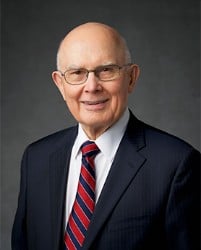
Elder Dallin H. Oaks

Topics: ,

“This unique mortal mission of the Lord—the gospel as He defined it—we know as the Atonement. The fulness of the gospel, therefore, connotes a fuller comprehension of the Atonement. This we do not obtain from the Bible alone. The word atonement, in any of its forms, is mentioned only once in the King James Version of the New Testament. In the Book of Mormon, it appears 39 times! The Book of Mormon also contains more references to the Resurrection than does the Bible.”

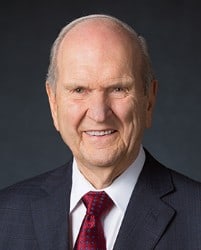
Russell M. Nelson  |  "A Testimony of the Book of Mormon," Conference October 1999

Topics: , , ,

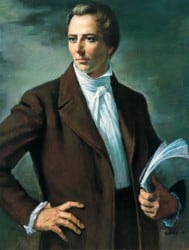
Joseph Smith Portrait

“The fundamental principles of our religion are the testimony of the apostles and prophets, concerning Jesus Christ. That he died, was buried, and rose again at the third day, and ascended into heaven; and all other things which pertain to our religion are only appendages to it.”

Joseph Smith  |  History of the Church, 3:30

Topics: ,

Elder Dieter F. Uchtdorf

“Though we are incomplete, God loves us completely. Though we are imperfect, He loves us perfectly. Though we may feel lost and without compass, God’s love encompasses us completely. … He loves every one of us, even those who are flawed, rejected, awkward, sorrowful, or broken”

Elder Dieter F. Uchtdorf

Topics: , ,

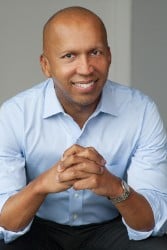
“Each of us is more than the worst thing we’ve ever done.”

Bryan Stevenson  |  Just Mercy: A Story of Justice and Redemption

Topics: , , ,

You need not know everything before the power of the atonement will work for you. Have faith in Christ, it begins to work the day you ask.

Boyd K. Packer  |  Ensign, May 1997, p. 10

Topics: ,

Elder Jeffery R. Holland of the LDS church

“The Lord has probably spoken enough comforting words to supply the whole universe, and yet all we see around us are unhappy Latter-day Saints, worried Latter-day Saints, and gloomy Latter-day Saints into whose troubled hearts not one of these innumerable consoling words seems to be allowed to enter . . . on the night of Gethsemane, the night of the greatest suffering ever to take place on this world, the Savior said, “Peace I leave with you, my peace I give unto you . . . let not your heart be troubled, neither let it be afraid” (John 14:27). I submit to you, that may be one of the Savior’s commandments that is, even in the hearts of otherwise faithful Latter-Day Saints, almost universally disobeyed.”

Elder Jeffrey R. Holland  |  CES Young Adult Fireside, BYU, March 2, 1997

Topics: , , ,

Thomas S. Monson

Of all the tests we face, none hurts more than the death of a loved one. Through the resurrection of Jesus Christ all are delivered from death, and all will rise in the Resurrection. And by the Atonement of Jesus Christ, all may gain peace in this life washed clean from the sorrows of sin and have hope of a glorious resurrection with the just…At this Easter season we give our sure witness that Jesus is the Christ, the Redeemer of all mankind. Because of His atoning sacrifice, He stands as our Advocate and Savior. Though He was crucified, He rose triumphant from the tomb to our everlasting blessing and benefit.

Thomas S. Monson  |  First Presidency Easter Message [Thomas S. Monson, Henry B. Eyring, Dieter F. Uchtdorf], LDS Church News, March 31, 2013

Topics: , , , ,

“The Atonement of Jesus Christ outweighs, surpasses, and transcends every other mortal event, every new discovery, and every acquisition of knowledge, for without the Atonement all else in life is meaningless.”

Tad R. Callister  |  The Infinite Atonement

Topics: ,

The miracle of the Atonement is not just that we can go home but that—miraculously—we can feel at home there. If Heavenly Father and His Son did not require faith and repentance, then there would be no desire to change.

Think of your friends and family members who have chosen to live without faith and without repentance. They don’t want to change. They are not trying to abandon sin and become comfortable with God. Rather, they are trying to abandon God and become comfortable with sin.

If the Father and the Son did not require covenants and bestow the gift of the Holy Ghost, then there would be no way to change. We would be left forever with only willpower, with no access to His power. If Heavenly Father and His Son did not require endurance to the end, then there would be no internalization of those changes over time. They would forever be surface and cosmetic rather than sinking inside us and becoming part of us—part of who we are. Put simply, if Jesus didn’t require practice, then we would never become Saints.

Brad Wilcox  |  His Grace Is Sufficient

Topics: , , , , ,

“Every child that comes into this world is carried in water, is born of water, and of blood, and of the spirit. So when we are born into the kingdom of God, we must be born the same way. By baptism, we are born of water. Through the shedding of the blood of Christ, we are cleansed and sanctified; and we are justified, through the Spirit of God, for baptism is not complete without the baptism of the Holy Ghost. You see the parallel between birth into the world and birth into the kingdom of God.”

Joseph Fielding Smith  |  Doctrines of Salvation

Topics: ,

Before that sacred night in Bethlehem, the events of history and the words of the prophets of all dispensations prepared the way for the first coming of the Lord and His Atonement. Similarly, history and prophecy laid the groundwork for the Restoration of the gospel through the Prophet Joseph Smith. Do we have eyes to see that the events and prophecies of our time are preparing us for the Savior’s Second Coming?

Elder Robert D. Hales  |  “Preparations for the Restoration and the Second Coming: ‘My Hand Shall Be over Thee,'” Ensign, November 2005, p. 92

Topics: , ,

“God’s desire that Latter-day Saints keep on trying also extends beyond overcoming sin. Whether we suffer because of troubled relationships, economic challenges, or illnesses or as a consequence of someone else’s sins, the Savior’s infinite Atonement can heal even—and perhaps especially—those who have innocently suffered. He understands perfectly what it is like to suffer innocently as a consequence of another’s transgression. As prophesied, the Savior will “bind up the brokenhearted, … give … beauty for ashes, the oil of joy for mourning, [and] the garment of praise for the spirit of heaviness.” No matter what, with His help, God expects Latter-day Saints to keep on trying.”

Elder Dale G. Renlund  |  "Latter-day Saints Keep on Trying"

Topics: , ,

Neal A. Maxwell Headshot

When spiritually aligned, a poise can come, even when we do not know “the meaning of all things.” (1 Ne. 11:17) Such contented assurance produces not arrogance but quiet acceptance, which is its own form of being “anxiously engaged” but without all the bells and whistles (D&C 58:27; see also D&C 58:28).

However, this spiritual contentment rests on our accepting the Atonement of Jesus, because we “have come to a knowledge of the goodness of God, and his matchless power, and his wisdom, and his patience, and his long-suffering towards the children of men; and also, the atonement which has been prepared from the foundation of the world” (Mosiah 4:6).

Again, brothers and sisters, seeing Alma move from wanting to be a “trump” to being a humble “instrument” and from wanting to “shake the earth” to “perhaps [bringing] some soul to repentance” is a stunning transition! (See Alma 29:1.) Furthermore, isn’t it wonderful that we are permitted to grow, whether that growth is expressed in the space of nine verses or in a lifetime?

Elder Neal A. Maxwell  |  “Content with the Things Allotted unto Us,” Ensign, May 2000, p. 72

Topics: ,

No one on this earth loves you as He does. No one here understands you better or really knows your sorrows and weaknesses. No one on earth has the power that Jesus Christ has. No one here is more eager for you to become everything you can become. No one pleads with the Father on your behalf as He does.

Russell M. Nelson  |  “Come, Let Us Adore Him”

Topics: , ,

Image of Elizabeth Smart

“I also believe in faith. Faith in a loving and kind heavenly Father who will always care about me. Faith that my worth will never be diminished. Faith that God knows how I feel and that I can depend on him to help me through it all. I believe that God not only suffered for me, but that He will make everything up to me in His own time and His own way. That gives me the peace I need to feel like justice will win out in the end.”

Elizabeth Smart  |  My Story: Elizabeth Smart

Topics: , , ,

“Jacob placed no qualifiers when he said the Savior would suffer ‘the pains of every living creature, both men, women and children, who belong to the family of .’ These were pains both related and unrelated to sin or transgression. In other words, the Savior voluntarily took upon himself not only the cumulative burden of sin and transgression, but also the cumulative burden of all depression, all loneliness, all sorrow, all mental, emotional, and physical hurt, and all weakness of every kind that afflicts mankind.”

Tad R. Callister  |  The Infinite Atonement

Topics:

“President Gordon B. Hinckley spoke of [the Atonement’s] relationship to other events in world history: “When all is said and done, when all of history is examined, when the deepest depths of the human mind have been explored, there is nothing so wonderful, so majestic, so tremendous as this act of grace.”

Tad R. Callister  |  The Infinite Atonement

Topics: ,

“Is the Lord truly saying that refusing to forgive another is a greater sin than the offense committed against us? Yes. Truman Madsen suggests one reason for this: In refusing to forgive another, we, in effect, attempt to deny the blessings of the Atonement to that person.”

Roderick J. Linton  |  Ensign, April 1993, p. 15

Topics: ,

“The Atonement was designed to do more than restore us to the ‘starting line’—more than just wipe the slate clean. [Its] crowning purpose [is] to endow us with power so that we might overcome each of our weaknesses and acquire the divine traits that would make us like God.”

Tad R. Callister  |  “How Can I Lead a More Saintly Life?” p. 89

Topics: ,

“It is doctrinally incomplete to speak of the Lord’s atoning sacrifice by shortcut phrases, such as “the Atonement” or “the enabling power of the Atonement” or “applying the Atonement” or “being strengthened by the Atonement.” These expressions present a real risk of misdirecting faith by treating the event as if it had living existence and capabilities independent of our Heavenly Father and His Son, Jesus Christ…There is no amorphous entity called “the Atonement” upon which we may call for succor, healing, forgiveness, or power. Jesus Christ is the source. Sacred terms such as Atonement and Resurrection describe what the Savior did, according to the Father’s plan, so that we may live with hope in this life and gain eternal life in the world to come. The Savior’s atoning sacrifice–the central act of all human history–is best understood and appreciated when we expressly and clearly connect it to Him.”

Russell M. Nelson  |  "Drawing the Power of Jesus Christ into Our Lives," Conference April 2017

Topics: ,

Our Lord’s descent from the holy heights of the Mount of Transfiguration was more than a physical return from greater to lesser altitudes; it was a passing from sunshine into shadow, from the effulgent glory of heaven to the mists of worldly passions and human unbelief; it was the beginning of His rapid descent into the valley of humiliation.

James E. Talmage  |  Jesus The Christ

Topics: ,

“God and Christ are omniscient, and yet the promise is: ‘He who has repented of his sins, the same is forgiven, and I, the Lord, remember them no more.’ Our Lord is like the mother of Wendell Berry’s poem, whose forgiveness is ‘so complete that I wonder sometimes if it did not precede my wrong.’ He purposely forgives our sins, to extirpate our shame. The act is sublime.”

Terryl and Fiona Givens  |  "The Christ Who Heals"

Topics: , , ,

“Had agency come to man without the Atonement, it would have been a fatal gift.”

Boyd K. Packer

Topics: ,

Neal A. Maxwell Headshot

“Christ’s Atonement, being the central act of human history, benefits super-sinners, sinners, and all of us makers of mistakes. Taking up the cross daily, rather than quarterly or semi-annually, helps us in the isometrics of discipleship.”

Elder Neal A. Maxwell

Topics: ,

“The Savior teaches that we will have tribulation in the world, but we should ‘be of good cheer’ because He has ‘overcome the world’ (John 16:33). His Atonement reaches and is powerful enough not only to pay the price for sin but also to heal every mortal affliction. The Book of Mormon teaches that ‘he shall go forth, suffering pains and afflictions and temptations of every kind; and this that the word might be fulfilled which saith he will take upon him the pains and the sicknesses of his people’ (Alma 7:11; see also 2 Nephi 9:21).

“He knows of our anguish, and He is there for us. Like the Good Samaritan in His parable, when He finds us wounded at the wayside, He binds up our wounds and cares for us (see Luke 10:34). Brothers and sisters, the healing power of His Atonement is for you, for us, for all.”

“Lucifer whispers that life’s not fair and that if the gospel were true, we would never have problems or disappointments. … The gospel isn’t a guarantee against tribulation. That would be like a test with no questions. Rather, the gospel is a guide for maneuvering through the challenges of life with a sense of purpose and direction.”

Sheri Dew  |  “This Is a Test. It Is Only a Test,” The Best of Women’s Conference (2000), 134–35

Topics: , ,

“I am so profoundly grateful for the gospel of Jesus Christ, for a testimony of the Atonement of the Savior. I believe in it with all my heart, and I live for it, and I bear witness of it this day. Of all of the events of human history, none other approaches the Atonement of the Savior in its meaning and in its results. God be thanked for the gift of His precious Son, to whom we all owe thanks for His sacrifice in our behalf.”

Gordon B. Hinckley  |  Inspirational Thoughts, Liahona, Feb 2007, 2–6

Topics: ,