Pride

LDS Quotes on Pride

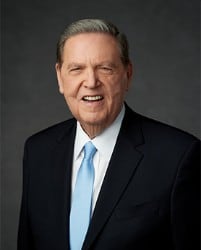
Elder Jeffery R. Holland of the LDS church

“Remaining true to our Christian principles is the only way divine influence can help us. The Spirit has a near impossible task to get through to a heart that is filled with hate or anger or vengeance or self-pity.”

Elder Jeffrey R. Holland

Topics: , , , ,

“You may remember a story about a ship’s captain who had a problem with his pride. One night at sea, this captain saw what looked like the light of another ship heading toward him. He had his signalman blink to the other ship: “Change your course 10 degrees south.” The reply came back, “Change your course 10 degrees north.” The ship’s captain answered: “I am a captain. Change your course south.” To which the replay came, “Well, I am a seaman first class. Change your course north.” This so infuriated the captain, he signaled back, “I say change your course south. I am on a battleship!” To which the reply came back, “And I say change your course north. I am in the lighthouse.” Like the captain, if we fail to modify our course and purge ourselves of pride, we may find ourselves shipwrecked upon the shoals of life. . . .”

H. David Burton  |  Ensign, May 1994, p. 68

Topics:

“We feel innately there should be a correlation between our worth and our reward. Before we can even put language to the intuitive concepts we feel, we sense a value we learn to call ‘fairness’…If we resent it when others receive more than their just desserts, it may be because we feel that our happiness is somehow compromised, cheapened, diluted, if our reward isn’t greater than the other, undeserving, person’s. This is in fact selfishness masquerading as high-minded virtue.”

Terryl and Fiona Givens  |  "The Christ Who Heals"

Topics: ,

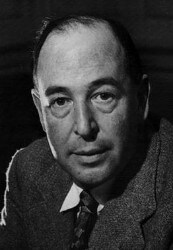
Pride gets no pleasure out of having something, only out of having more of it than the next man. . . . It is the comparison that makes you proud: the pleasure of being above the rest. Once the element of competition has gone, pride has gone.

CS Lewis  |  Mere Christianity

Topics:

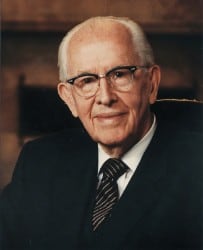
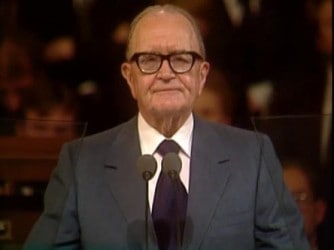
“The antidote for pride is humility—meekness, submissiveness. God will have a humble people. Either we can choose to be humble or we can be compelled to be humble. Alma said, “Blessed are they who humble themselves without being compelled to be humble.” Let us choose to be humble. We can choose to humble ourselves by conquering enmity toward our brothers and sisters, esteeming them as ourselves, and lifting them as high or higher than we are. We can choose to humble ourselves by receiving counsel and chastisement. We can choose to humble ourselves by forgiving those who have offended us. We can choose to humble ourselves by rendering selfless service. We can choose to humble ourselves by going on missions and preaching the word that can humble others. We can choose to humble ourselves by getting to the temple more frequently. We can choose to humble ourselves by confessing and forsaking our sins and being born of God. We can choose to humble ourselves by loving God, submitting our will to His, and putting Him first in our lives. Let us choose to be humble. We can do it. I know we can.”

Ezra Taft Benson

Topics: ,

“Pride does not look up to God and care about what is right. It looks sideways to man and argues who is right. Pride is manifest in the spirit of contention. Was it not through pride that the devil became the devil? Christ wanted to serve. The devil wanted to rule. Christ wanted to bring men to where He was. The devil wanted to be above men. Christ removed self as the force in His perfect life. It was not my will, but thine be done. . . . Humility responds to God’s will – to the fear of His judgments and the needs of those around us. To the proud, the applause of the world rings in their ears; to the humble, the applause of heaven warms their hearts. Someone has said, “Pride gets no pleasure out of having something, only out of having more of it than the next man.” (C. S. Lewis) Of one brother, the Lord said, “I, the Lord, am not well pleased with him, for he seeketh to excel, and he is not sufficiently meek before me.”

Ezra Taft Benson  |  “Cleansing the Inner Vessel,” Ensign, May 1986, p. 4

Topics: , ,

“A zero-sum game is one in which there is a fixed number of resources, and one can only acquire more if someone else receives less. Any benefit won by me can only come at a cost to you…

“Happiness is not a zero-sum game, but our telestial instincts lead us to act and think as if it were. Human psychology seems indelibly conditioned to measure our well-being by comparison with our neighbor. To a disappointing degree, we assess our own happiness by measuring our conditions and circumstances against those of others. What makes me feel rich or fortunate or successful is not an absolute quantity; it is more often the sense that I am richer or more fortunate or more successful than my neighbor or colleague.”

Terryl and Fiona Givens  |  "The Christ Who Heals"

Topics: ,

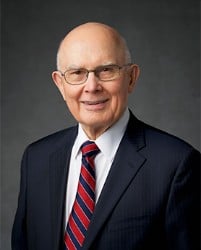
“The root of all evil is not money, but the love of money.”

Elder Dallin H. Oaks

Topics: ,

“We control the disposition of our means and resources, but we account to God for this stewardship over earthly things. It is gratifying to witness your generosity as you contribute to fast offerings and humanitarian projects. Over the years, the suffering of millions has been alleviated, and countless others have been enabled to help themselves through the generosity of the Saints. Nevertheless, as we pursue the cause of Zion, each of us should prayerfully consider whether we are doing what we should and all that we should in the Lord’s eyes with respect to the poor and the needy.

“We might ask ourselves, living as many of us do in societies that worship possessions and pleasures, whether we are remaining aloof from covetousness and the lust to acquire more and more of this world’s goods. Materialism is just one more manifestation of the idolatry and pride that characterize Babylon. Perhaps we can learn to be content with what is sufficient for our needs.”

Elder D. Todd Christofferson  |  “Come to Zion,” Ensign, October 2008

Topics: , ,

“A proud man Is always looking down on things and people; and, of course, as long as you are looking down, you cannot see something that is above you.”

CS Lewis  |  Mere Christianity

Topics:

“Pride is the complete anti-God state of mind. Pride gets no pleasure out of having something, only out of having more of it than the next man. We say people are proud of being rich or clever or good looking, but they are not. They are proud being richer or cleverer or better looking than others.”

CS Lewis  |  Mere Christianity

Topics:

“In the scriptures there is no such thing as righteous pride. It is always considered as a sin. We are not speaking of a wholesome view of self-worth, which is best established by a close relationship with God. But we are speaking of pride as the universal sin. . . . Essentially, pride is a “my will” rather than “thy will” approach to life. The opposite of pride is humbleness, meekness, submissiveness (see Alma 13:28), or teachableness. . . .Pride is characterized by “What do I want out of life?” rather than by “What would God have me do with my life?” It is self-will as opposed to God’s will. It is the fear of man over the fear of God.”

Ezra Taft Benson  |  in Conference Report, April 1986, pp. 5-6; or “Cleansing the Inner Vessel,” Ensign, May 1986, pp. 6-7

Topics: , ,

“The proud stand more in fear of men’s judgment than of God’s judgment. ‘What will men think of me?’ weighs heavier than ‘What will God think of me?’”

Ezra Taft Benson  |  “Beware of Pride,” Ensign, May 1989

Topics: ,

“Some prideful people are not so concerned as to whether their wages meet their needs as they are that their wages are more than someone else’s. Their reward is being a cut above the rest. This is the enmity of pride.”

Ezra Taft Benson  |  “Beware of Pride,” Ensign, May 1989

Topics: ,

“The proud depend upon the world to tell them whether they have value or not. Their self-esteem is determined by where they are judged to be on the ladders of worldly success. They feel worthwhile as individuals if the numbers beneath them in achievement, talent, beauty, or intellect are large enough. Pride is ugly. It says, ‘If you succeed, I am a failure’.”

Ezra Taft Benson

Topics: ,

“Contemplate the advantages of life in a society in which considerations of status were only secondary, where citizens were more concerned with their responsibilities than their rights, and where those in authority might even occasionally step forward and humbly acknowledge, “I could be wrong.” Must our need to be “right” be so all-consuming? Surely this intolerance of others and their viewpoints is nothing less than the hubris the Greeks viewed and warned against as the suicidal sin. One wonders how differently even recent world history might be written if its principal participants had yielded to the gentle nudgings of humility.”

Marlin K. Jensen  |  “To Walk Humbly with Thy God,” Ensign, May 2001, p. 10

Topics: , , ,

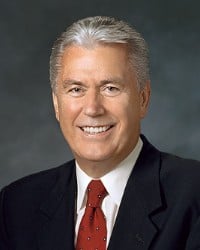
Elder Dieter F. Uchtdorf

“Pride is the sin of comparison. This is the sin of, ‘Thank God I am more special than you.’ At its core is the desire to be admired or envied. It is the sin of self-glorification. When those they envy stumble or suffer, they secretly cheer. When we become obsessed with our status; when we focus on our importance, power, or reputation; when we dwell on our public image…that’s when pride begins to corrupt. Despite his magnificent abilities and accomplishments, the Savior was always meek and humble.”

Elder Dieter F. Uchtdorf

Topics: ,

“What is the central characteristic of those having only five loaves and two fishes? What makes it possible, under the Master’s touch, for them to serve, lift, and bless so that they touch for good the lives of hundreds, even thousands? After a lifetime of dealing in the affairs of men and women, I believe it is the ability to overcome personal ego and pride – both are enemies to the full enjoyment of the Spirit of God and walking humbly before him. The ego interferes with husbands and wives asking each other for forgiveness. It prevents the enjoyment of the full sweetness of a higher love. The ego often prevents parents and children from fully understanding each other. The ego enlarges our feelings of self-importance and worth. It blinds us to reality. Pride keeps us from confessing our sins and shortcomings to the Lord and working out our repentance.”

James E. Faust  |  Ensign, May 1994, p. 6

Topics: , , ,

“Most of us think of pride as self-centeredness, conceit, boastfulness, arrogance, or haughtiness. All of these are elements of the sin, but the heart, or core, is still missing. The central feature of pride is enmity-enmity toward God and enmity toward our fellowmen. Enmity means “hatred toward, hostility to, or a state of opposition.” It is the power by which Satan wishes to reign over us.

“Pride is essentially competitive in nature. We pit our will against God’s. When we direct our pride toward God, it is in the spirit of “my will and not thine be done.”

Ezra Taft Benson  |  “Beware of Pride,” Ensign, May 1989

Topics: ,

“The proud make every man their adversary by pitting their intellects, opinions, works, wealth, talents, or any other worldly measuring device against others. In the words of C. S. Lewis: ‘Pride gets no pleasure out of having something, only out of having more of it than the next man. … It is the comparison that makes you proud: the pleasure of being above the rest. Once the element of competition has gone, pride has gone’.”

Ezra Taft Benson  |  “Beware of Pride,” Ensign, May 1989

Topics: ,

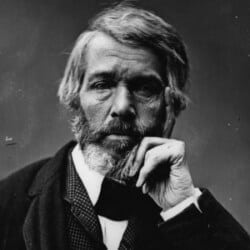
“The greatest of faults is to be conscious of none.”

Thomas Carlyle

Topics: ,

“Humility is an attribute of godliness possessed by true Saints. It is easy to understand why a proud man fails. He is content to rely upon himself only. This is evident in those who seek social position or who push others aside to gain position in fields of business, government, education, sports, or other endeavors. Our genuine concern should be for the success of others. The proud man shuts himself off from God, and when he does he no longer lives in the light.”

Howard W. Hunter  |  “The Pharisee and the Publican,” Ensign, May 1984, p. 66

Topics: ,

Elder Dieter F. Uchtdorf

“Pride is a switch that turns off priesthood power. Humility is a switch that turns it on.”

Elder Dieter F. Uchtdorf  |  "Pride and the Priesthood"

Topics: , ,

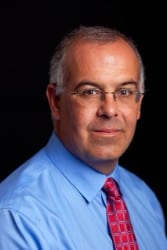
“The self-effacing person is soothing and gracious, while the self-promoting person is fragile and jarring. Humility is freedom from the need to prove you are superior all the time, but egotism is a ravenous hunger in a small space—self-concerned, competitive, and distinction-hungry. Humility is infused with lovely emotions like admiration, companionship, and gratitude.”

David Brooks  |  The Road to Character

Topics: , ,

“Twelve years ago President Ezra Taft Benson delivered a powerful conference address declaring that pride is “the universal sin, the great vice.” (“Beware of Pride,” Ensign, May 1989, p. 6) He taught that pride is essentially competitive in nature and made reference to his quote from C. S. Lewis: “Pride gets no pleasure out of having something, only out of having more of it than the next man. We say that people are proud of being rich, or clever, or good-looking, but they are not. They are proud of being richer, cleverer, or better-looking than others. If every one else became equally rich, or clever, or good-looking there would be nothing to be proud about. It is the comparison that makes you proud: the pleasure of being above the rest. Once the element of competition has gone, pride has gone. (Mere Christianity, 1960, p. 95 [or 109-110])”

Marlin K. Jensen  |  “To Walk Humbly with Thy God,” Ensign, May 2001, p. 10

Topics: , , ,

“Most of us think of pride as self-centeredness, conceit, boastfulness, arrogance, or haughtiness. All of these are elements of the sin, but the heart, or core, is still missing. The central feature of pride is enmity—enmity toward God and enmity toward our fellowmen. Enmity means ‘hatred toward, hostility to, or a state of opposition.’ It is the power by which Satan wishes to reign over us.”

Ezra Taft Benson  |  “Beware of Pride,” Ensign, May 1989

Topics: ,

“Fear of men’s judgment manifests itself in competition for men’s approval. The proud love ‘the praise of men more than the praise of God.’ Our motives for the things we do are where the sin is manifest. Jesus said He did ‘always those things’ that pleased God. Would we not do well to have the pleasing of God as our motive rather than to try to elevate ourselves above our brother and outdo another?.”

Ezra Taft Benson  |  “Beware of Pride,” Ensign, May 1989

Topics: ,

“Christ wants to lift us to where He is. Do we desire to do the same for others?”

Ezra Taft Benson

Topics: , ,

“Pride adversely affects all our relationships—our relationship with God and His servants, between husband and wife, parent and child, employer and employee, teacher and student, and all mankind. Our degree of pride determines how we treat our God and our brothers and sisters. Christ wants to lift us to where He is. Do we desire to do the same for others?”

Ezra Taft Benson  |  “Beware of Pride,” Ensign, May 1989

Topics: , , ,

Elder Dieter F. Uchtdorf

“There is enough heartache and sorrow in this life without our adding to it through our own stubbornness, bitterness, and resentment. … We must let go of our grievances. … That is the Lord’s way.”

Elder Dieter F. Uchtdorf  |  “The Merciful Obtain Mercy,” 76–77

Topics: , ,

“One of the most common of all sins among worldly people is relying on and then boasting in the arm of flesh. This is a most serious evil. It is a sin born of pride, a sin that creates a frame of mind which keeps men from turning to the Lord and accepting his saving grace. When a man knowingly or unknowingly engages in self-exultation because of his riches, his political power, his worldly learning, his physical prowess, his business ability, or even his works of righteousness, he is not in tune with the Spirit of the Lord. We would all do well to take a lesson from the Savior, who repeatedly acknowledged and gave credit to the Father in all things. Indeed, that precedent was set in the premortal council when Jesus Christ pledged the fruits of all he might himself accomplish to go to the Father: “And the glory be thine forever.” (Moses 4:2)

Marvin J. Ashton  |  “Neither Boast of Faith Nor of Mighty Works,” Ensign, May 1990, p. 65

Topics: , , , ,

“The willingness to forgive is a sign of spiritual and emotional maturity. It is one of the great virtues to which we all should aspire. Imagine a world filled with individuals willing both to apologize and to accept an apology. Is there any problem that could not be solved among people who possessed the humility and largeness of spirit and soul to do either — or both — when needed?”

Gordon B. Hinckley  |  Standing for Something: 10 Neglected Virtues That Will Heal Our Hearts and Homes

Topics: , , ,

Elder Jeffery R. Holland of the LDS church

“Envy is a mistake that just keeps on giving. Obviously we suffer a little when some misfortune befalls us, but envy requires us to suffer all good fortune that befalls everyone we know! What a bright prospect that is—downing another quart of pickle juice every time anyone around you has a happy moment!”1

Elder Jeffrey R. Holland  |  Jeffrey R. Holland, “The Laborers in the Vineyard,” Ensign, May 2012, 31–32.

Topics: ,

“Our enmity toward God takes on many labels, such as rebellion, hard-heartedness, stiff-neckedness, unrepentant, puffed up, easily offended, and sign seekers. The proud wish God would agree with them. They aren’t interested in changing their opinions to agree with God’s.”

Ezra Taft Benson  |  “Beware of Pride,” Ensign, May 1989

Topics: , ,

“Comparison is the thief of joy.”

Theodore Roosevelt

Topics: ,

“Pride is concerned with WHO is right, Humility is concerned with WHAT is right.”

Ezra Taft Benson

Topics: ,

“Pride is essentially competitive in nature. We pit our will against God’s. When we direct our pride toward God, it is in the spirit of ‘my will and not thine be done.’ As Paul said, they ‘seek their own, not the things which are Jesus Christ’s’.”

Ezra Taft Benson  |  “Beware of Pride,” Ensign, May 1989

Topics: ,

“The proud cannot accept the authority of God giving direction to their lives. They pit their perceptions of truth against God’s great knowledge, their abilities versus God’s priesthood power, their accomplishments against His mighty works.”

Ezra Taft Benson  |  “Beware of Pride,” Ensign, May 1989

Topics: ,

“Now this wickedness of pride and haughtiness does not refer to wealth or to money, for Paul said that not money itself, but “the love of money is the root of all evil.” (1 Timothy 6:10) Whenever we love money, status, possessions, or position more than righteousness, this is that false pride which must be avoided as the plague. That is why the Lord told us that riches, per se, are not wicked and that we could even seek for riches if we do so with proper intent.”

Theodore M. Burton  |  “A Disease Called Pride,” BYU Speeches of the Year, October 13, 1971, p. 2

Topics: ,

“Thus does Mormon, the prophet, accurately describe our own society [see Mormon 8:36-37) of elegantly dressed, competitive, fashion-infatuated, status-conscious people. Note that the Lord does not stress the ordinary iniquities of crime and immorality, of atheism and lawlessness. Instead he stresses the intolerance, the uncharitable state of mind, and the vanity that exist in our present world. He warns us of the pride, the envy, the arrogance, and the malice that exist in our day. We do not persecute the poor; we simply tend to ignore them and forget them as the prophet predicted. (See Mormon 8:39.)”

Theodore M. Burton  |  “A Disease Called Pride,” BYU Speeches of the Year, October 13, 1971, p. 4

Topics: , ,

“Being self-taught is no disgrace; but being self-certified is another matter.”

Hugh Nibley  |  Of All Things!: A Nibley Quote Book

Topics:

“I can forgive but I cannot forget is another way of saying I cannot forgive.”

Henry Ward Beecher

Topics: ,

“Pride is a very misunderstood sin, and many are sinning in ignorance. In the scriptures there is no such thing as righteous pride—it is always considered a sin. Therefore, no matter how the world uses the term, we must understand how God uses the term so we can understand the language of holy writ and profit thereby.”

Ezra Taft Benson  |  “Beware of Pride,” Ensign, May 1989

Topics: ,

“Pride is a sin that can readily be seen in others but is rarely admitted in ourselves.”

Ezra Taft Benson  |  “Beware of Pride,” Ensign, May 1989

Topics: ,