“Too often we pray to have patience, but we want it right now!”
| Waiting upon the Lord: Thy Will Be Done, October 2011 General Conference

LDS Quotes on Patience
“Too often we pray to have patience, but we want it right now!”
| Waiting upon the Lord: Thy Will Be Done, October 2011 General Conference
“There is also a dimension of patience which links it to a special reverence for life. Patience is a willingness, in a sense, to watch the unfolding purposes of God with a sense of wonder and awe, rather than pacing up and down within the cell of our circumstance. Put another way, too much anxious opening of the oven door and the cake falls instead of rising. So it is with us. If we are always selfishly taking our temperature to see if we are happy, we will not be…When we are impatient, we are neither reverential nor reflective because we are too self-centered. Whereas faith and patience are companions, so are selfishness and impatience. It is so easy to be confrontive without being informative; so easy to be indignant without being intelligent; so easy to be impulsive without being insightful. It is so easy to command others when we are not in control of ourselves.”
| Patience, BYUDA 11/79

“Life is full of difficulties. Some are minor and others are major. There seems to be an unending supply of challenges for one and all. Our problem is that we often expect instantaneous solutions to such challenges, forgetting that frequently the heavenly virtue of patience is required.”
“Do not expect to become perfect at once. If you do, you will be disappointed. Be better today than you were yesterday, and be better tomorrow than you are today. The temptations that perhaps partially overcome us today, let them not overcome us so far tomorrow. Thus continue to be a little better day by day; and do not let your life wear away without accomplishing good to others as well as to ourselves.”
| Teachings of Presidents of the Church: Lorenzo Snow, p. 103
“If patience is worth anything, it must endure to the end of time. And a living faith will last in the midst of the blackest storm.”
“Who can count the vast throngs of the lonely, the aged, the helpless- those who feel abandoned by the caravan of life as it moves relentlessly onward and then disappears beyond the sight of those who ponder, who wonder, and who sometimes question as they are left alone with their thoughts. Patience can be a helpful companion during such stressful times.”
| Patience- A Heavenly Virtue, October 1995 General Conference

Brothers and sisters, sometimes our prayers are answered quickly with the outcome we hope for. Sometimes our prayers are not answered in the way we hope for, yet with time we learn that God had greater blessings prepared for us than we initially anticipated. And sometimes our righteous petitions to God will not be granted in this life. As Elder Neal A. Maxwell said, “Faith also includes trust in God’s timing.”
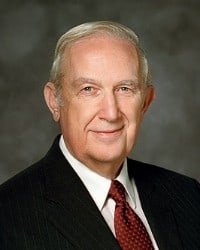
“His invitation, “Ask, and ye shall receive” (3 Ne. 27:29) does not assure that you will get what you want. It does guarantee that, if worthy, you will get what you need, as judged by a Father that loves you perfectly, who wants your eternal happiness even more than do you.”
| Trust in the Lord, Ensign, November 1995
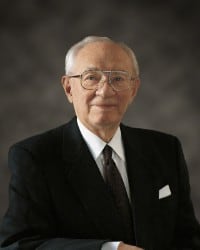
“None of us will become perfect in a day or a month or a year. We will not accomplish it in a lifetime, but we can begin now, starting with our more obvious weaknesses and gradually converting them into strengths.”
| Standing for Something
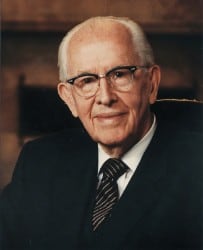
“. . . we must be careful, as we seek to become more and more godlike, that we do not become discouraged and lose hope. Becoming Christlike is a lifetime pursuit and very often involves growth and change that is slow, almost imperceptible. The scriptures record remarkable accounts of men whose lives changed dramatically, in an instant. . . . But we must be cautious as we discuss these remarkable examples. Though they are real and powerful, they are the exception more than the rule. For every Paul, for every Enos, and for every King Lamoni, there are hundreds and thousands of people who find the process of repentance much more subtle, much more imperceptible. Day by day they move closer to the Lord, little realizing they are building a godlike life. They live quiet lives of goodness, service, and commitment. They are like the Lamanites, who the Lord said “were baptized with fire and with the Holy Ghost, and they knew it not.” (3 Ne. 9:20)
| “A Mighty Change of Heart,” Ensign, October 1989, p. 2
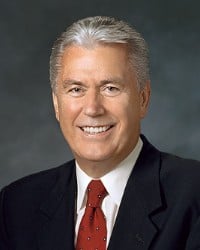
“Patience means staying with something until the end. It means delaying immediate gratification for future blessings. It means reining in anger and holding back the unkind word. It means resisting evil, even when it appears to be making others rich. Patience means accepting that which cannot be changed and facing it with courage, grace, and faith. It means being “willing to submit to all things which the Lord seeth fit to inflict upon [us], even as a child doth submit to his father.” Ultimately, patience means being “firm and steadfast, and immovable in keeping the commandments of the Lord”every hour of every day, even when it is hard to do so. In the words of John the Revelator, “Here is the patience of the saints: here are they that keep the commandments of God, and . . . faith [in] Jesus.” Patience is a process of perfection. The Savior Himself said that in your patience you possess your souls. Or, to use another translation of the Greek text, in your patience you win mastery of your souls. Patience means to abide in faith, knowing that sometimes it is in the waiting rather than in the receiving that we grow the most. This was true in the time of the Savior. It is true in our time as well, for we are commanded in these latter days to “continue in patience until ye are perfected.”
| Continue in Patience, April 2010 General Conference

The first principle of the gospel is faith in the Lord Jesus Christ. Faith means trust – trust in God’s will, trust in His way of doing things, and trust in His timetable. We should not try to impose our timetable on His. . . . Indeed, we cannot have true faith in the Lord without also having complete trust in His will and in His timing. . . .
The Lord’s timing also applies to the important events of our personal lives. A great scripture in the Doctrine and Covenants declares that a particular spiritual experience will come to us “in his own time, and in his own way, and according to his own will” (D&C 88:68). This principle applies to revelation (see Oaks, “Teaching and Learning by the Spirit,” Ensign, March 1997, 11) and to all of the most important events in our lives: birth, marriage, death, and even our moves from place to place. . . .
It is not enough that we are under call, or even that we are going in the right direction. The timing must be right, and if the time is not right, our actions should be adjusted to the Lord’s timetable as revealed by His servants. . . .
| “Timing,” Ensign, October 2003
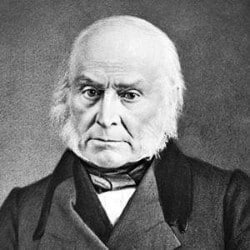
“Patience and perseverance have a magical effect before which difficulties disappear and obstacles vanish.”
“Patience is tied very closely to faith in our Heavenly Father. Actually, when we are unduly impatient, we are suggesting that we know what is best—better than does God. Or, at least, we are asserting that our timetable is better than His. We can grow in faith only if we are willing to wait patiently for God’s purposes and patterns to unfold in our lives, on His timetable.”
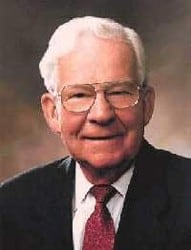
“We need to come to terms with our desire to reach perfection and with our frustration when our accomplishments or our behaviors are less than perfect. I feel that one of the great myths we would do well to dispel is that we’ve come to earth to perfect ourselves, and nothing short of that will do. If I understand the teachings of the prophets of this dispensation correctly, we will not become perfect in this life, though we can make significant strides toward that goal. . . .I am also convinced of the fact that the speed with which we head along the straight and narrow path isn’t as important as the direction in which we are traveling. That direction, if it is leading toward eternal goals, is the all-important factor.”
| Ensign, May 1989, pp. 20-21
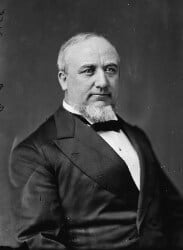
“If God deprives His children of any present blessing, it is so that He may bestow upon them a greater and more glorious one by and by.”
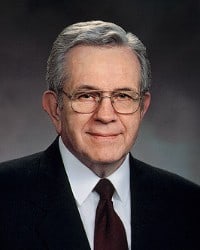
“Forgiveness is powerful spiritual medicine. To extend forgiveness, that soothing balm, to those who have offended you is to heal. And, more difficult yet, when the need is there, forgive yourself!”
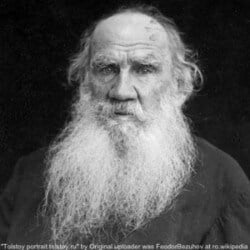
“The two most powerful warriors are patience and time.”
“This is a gospel of great expectations, but God’s grace is sufficient for each of us if we remember that there are no instant Christians.”
| ‘Judge not,’ President Monson counsels women
“Patience – the ability to put our desires on hold for a time-is a precious and rare virtue. We want what we want, and we want it now. Therefore, the very idea of patience may seem unpleasant and, at times, bitter. Nevertheless, without patience, we cannot please God; we cannot become perfect. Indeed, patience is a purifying process that refines understanding, deepens happiness, focuses action, and offers hope for peace.”
| "Continue in Patience", Ensign, May 2010, 56–59
“Patience is a purifying process that refines understanding, deepens happiness, focuses action, and offers hope for peace.”
“Long sufferers are really something because they think the errant and unrepentant are really something – something worth saving.”

“One speaker in Church directs, “You can’t do everything. Don’t run faster than you have strength”. The next says, “Push yourself. You can always do more.” One person advises, “Don’t worry about what you can’t do” at the same time someone else says, “You can do anything you put your mind to.” In one hymn we sing, “I need thee every hour,” and in another we sing, “We will work out our salvation”. In this world of mixed messages, I never can seem to escape the nagging though, “If only I were better organized or if only I tried harder.” Satan tempted Christ with the word, ‘if.’ He often comes to me with the words, ‘if only.’”
| The Continuous Atonement
| The Atonement Can Secure Your Peace and Happiness, Ensign, 11/2006
“Realizing that change is a process, most of us would never get angry at a seed for not being a flower or expect a sculptor to transform a block of marble into a masterpiece overnight.”
“The lessons we learn from patience will cultivate our character, lift our lives, and heighten our happiness.”
| Continue in Patience, April 2010 General Conference
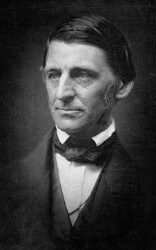
“Adopt the pace of nature: her secret is patience.”
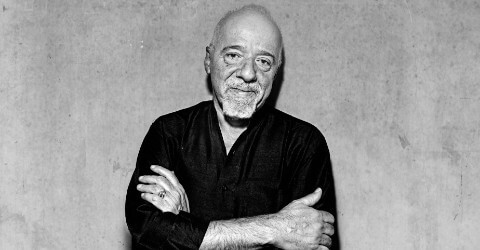
“I have seen many storms in my life. Most storms have caught me by surprise, so I had to learn very quickly to look further and understand that I am not capable of controlling the weather, to exercise the art of patience and to respect the fury of nature.”
“If you look for perfection, you’ll never be content.”
| Anna Karenina

“Genius is patience.”
“Indeed, this life is a test. It is a test of many things – of our convictions and priorities, our faith and our faithfulness, our patience and our resilience, and in the end, our ultimate desires.”
“Brothers and sisters, the scriptures are like a developmental display window through which we can see gradual growth – along with this vital lesson: it is direction first, then velocity! Enoch’s unique people were improved “in process of time.” (Moses 7:21) Jesus “received not of the fulness at first, but received grace for grace” (D&C 93:12) and even He grew and “increased in wisdom and stature” (Luke 2:52).”
| “Not Withstanding My Weakness,” Ensign, November 1976