Faith

LDS Quotes on Faith

Thus, faith in Christ leads to righteous action, which increases our spiritual capacity and power. Understanding that faith is a principle of action and of power inspires us to exercise our moral agency in compliance with gospel truth, invites the redeeming and strengthening powers of the Savior’s Atonement into our lives, and enlarges the power within us whereby we are agents unto ourselves (see D&C 58:28).

Elder David A. Bednar  |  “Ask in Faith,” Ensign, May 2008, p. 95

Topics: , ,

True faith is focused in and on the Lord Jesus Christ and always leads to righteous action. The Prophet Joseph Smith taught that “faith [is] the first principle in revealed religion, and the foundation of all righteousness” and that it is also “the principle of action in all intelligent beings” (Lectures on Faith [1985], 1). Action alone is not faith in the Savior, but acting in accordance with correct principles is a central component of faith. Thus, “faith without works is dead” (James 2:20).

Elder David A. Bednar  |  “Ask in Faith,” Ensign, May 2008

Topics: , , ,

You never totally move beyond faith as hope; it is not a box we check off and say, “I am done.” Rather, we begin again and gain experience with a new principle. It spirals upward as a helix, building and continuing. Here is how that occurs. We move from level of faith to level of faith through desire, a willingness to experiment and act, and then receiving a spiritual confirmation as evidence of things not seen. This process and experience bolster our faith. Consequently, we exhibit an increased willingness to experiment and receive an even greater confirmation. Our confidence waxes stronger, line upon line, precept upon precept, here a little and there a little.

Elder David A. Bednar  |  Presentation at BYU-Idaho

Topics: , , ,

“To do well does not mean everything will always turn out well. The key is to remember that faith and obedience are still the answers, even when things go wrong, perhaps especially when things go wrong.”

David E. Sorensen  |  Faith Is the Answer

Topics: , ,

“The tuition of diligence and learning by faith must be paid to obtain and personally ‘own’ such knowledge.”

Elder David A. Bednar

Topics: , ,

“True faith is focused in and on the Lord Jesus Christ and always leads to righteous action. The Prophet Joseph Smith taught that “faith [is] the first principle in revealed religion, and the foundation of all righteousness” and that it is also “the principle of action in all intelligent beings” (Lectures on Faith [1985], 1). Action alone is not faith in the Savior, but acting in accordance with correct principles is a central component of faith. Thus, “faith without works is dead” (James 2:20). The Prophet Joseph further explained that “faith is not only the principle of action, but of power also, in all intelligent beings, whether in heaven or on earth” (Lectures on Faith, 3). Thus, faith in Christ leads to righteous action, which increases our spiritual capacity and power. Understanding that faith is a principle of action and of power inspires us to exercise our moral agency in compliance with gospel truth, invites the redeeming and strengthening powers of the Savior’s Atonement into our lives, and enlarges the power within us whereby we are agents unto ourselves (see D&C 58:28).”

Elder David A. Bednar  |  Ask In Faith, April 2008 General Conference

Topics: , ,

Each of you needs to build a reservoir of faith so you can draw upon it when someone you love or respect betrays you, when some scientific discovery seems to cast doubt on a gospel principle, or when someone makes light of sacred things, such as the name of God or the sacred ceremonies of the temple. You need to draw on your reservoir of faith when you are weak or when someone else calls on you to strengthen them. You also need to draw on your reservoir of faith when some requirement of Church membership or service interferes with your personal preferences . . . . Faith in the Lord Jesus Christ prepares you for whatever life brings. This kind of faith prepares you to deal with life’s opportunities – to take advantage of those that are received and to persist through the disappointments of those that are lost.

Elder Dallin H. Oaks  |  “Faith in the Lord Jesus Christ,” Ensign, May 1994, p. 98

Topics: ,

“We are indebted to the men and women who kept the light of faith and learning alive through the centuries to the present day. We have only to contrast the lesser light that exists among peoples unfamiliar with the names of God and Jesus Christ to realize the great contribution made by Christian teachers through the ages. We honor them as servants of God.”

Elder Dallin H. Oaks  |  Conference Report, April 1995, 113

Topics: ,

Each of you needs to build a reservoir of faith so you can draw upon it when someone you love or respect betrays you, when some scientific discovery seems to cast doubt on a gospel principle, or when someone makes light of sacred things, such as the name of God or the sacred ceremonies of the temple. You need to draw on your reservoir of faith when you are weak or when someone else calls on you to strengthen them. You also need to draw on your reservoir of faith when some requirement of Church membership or service interferes with your personal preferences.

You need the strength that comes from faith and trust in the Lord Jesus Christ if you are to fulfill your duty to “stand as witnesses of God at all times and in all things, and in all places” (Mosiah 18:9). In times of trial you need the comfort offered in the holy scriptures, which assure you that when you have the shield of faith you will “be able to quench all the fiery darts of the wicked” (D&C 27:17).

Faith in the Lord Jesus Christ prepares you for whatever life brings. This kind of faith prepares you to deal with life’s opportunities – to take advantage of those that are received and to persist through the disappointments of those that are lost.

Most importantly, faith in the Lord Jesus Christ opens the door of salvation and exaltation: “For no [one] can be saved, according to the words of Christ, save they shall have faith in his name” (Moro. 7:38).

Elder Dallin H. Oaks  |  “Faith in the Lord Jesus Christ,” General Conference, April 1994; Ensign, May 1994, p. 100

Topics: , ,

Elder Jeffery R. Holland of the LDS church

Your Father in heaven knows your name and knows your circumstance. He hears your prayers. He knows your hopes and dreams, including your fears and frustrations. And He knows what you can become through faith in Him.

Elder Jeffrey R. Holland  |  Created for Greater Things

Topics: , , , , ,

Neal A. Maxwell Headshot

One’s life . . . cannot be both faith-filled and stress-free. . . . Therefore, how can you and I really expect to glide naively through life, as if to say, ”Lord, give me experience, but not grief, not sorrow, not pain, not opposition, not betrayal, and certainly not to be forsaken. Keep from me, Lord, all those experiences which made Thee what Thou art! Then let me come and dwell with Thee and fully share Thy joy!” . . .Real faith . . . is required to endure this necessary but painful developmental process.

Elder Neal A. Maxwell  |  “Lest Ye Be Wearied and Faint in Your Minds,” Ensign, May 1991, pp. 88, 90

Topics: , ,

“I have been driven many times upon my knees by the overwhelming conviction that I had nowhere else to go.”

Abraham Lincoln

Topics: ,

Thomas S. Monson

“What are the three most important decisions? First, what will be my faith? Second, whom shall I marry? Third, what will be my life’s work?”

Thomas S. Monson  |  "Decisions Determine Destiny"

Topics: , , , ,

“Faith is more like being faithful to your husband or wife than it is like believing in magic. Fidelity is key. You may fall in love with someone because of how well they complement your story, but you’ll prove yourself faithful to them only when you care more for the flawed, difficult, and unplotted life you end up sharing with them. Faith isn’t the opposite of knowledge. Rather, like love, faith perfects knowledge by practicing fidelity to it.”

Adam S. Miller

Topics: , ,

Neal A. Maxwell Headshot
You cannot have adequate faith in a Christ you do not adequately know.

Elder Neal A. Maxwell  |  The Neal A. Maxwell Quote Book

Topics: , ,

Be believing, be happy, don’t get discouraged. Things will work out.

Gordon B. Hinckley

Topics: ,

The greatest need in the world today is faith in God and courage to do his will.

David O. McKay  |  Teachings of Presidents of the Church: David O. McKay, p. 171

Topics: , ,

So far as I am concerned, I say, let everything come as God has ordained it. I do not desire trials; I do not desire affliction . . . but if . . . the powers of darkness are let loose, and the spirit of evil is permitted to rage, and an evil influence is brought to bear on the Saints, and my life, with theirs, is put to the test; let it come, for we are the Saints of the Most High God, and all is well, all is peace, all is right, and will be, both in time and in eternity.

John Taylor  |  (John Taylor, Journal of Discourses, Vol. 5, 115-116)

Topics: , , ,

Each holy temple stands as a symbol of our membership in the Church, as a sign of our faith in life after death, and as a sacred step toward eternal glory for us and our families.

Russell M. Nelson  |  Personal Preparation for Temple Blessings

Topics: , ,

Neal A. Maxwell Headshot

Just as the capacity to defer gratification is a sign of real maturity, likewise the willingness to wait for deferred explanation is a sign of real faith and of trust spread over time.

Elder Neal A. Maxwell  |  “Willing to Submit,” Ensign, May 1985, p. 71

Topics: , ,

Elder Jeffery R. Holland of the LDS church

“I am not asking you to pretend to faith you do not have. I am asking you to be true to the faith you do have.”

Elder Jeffrey R. Holland  |  "Lord, I Believe"

Topics: , ,

Joseph Smith Portrait

“A religion that does not require the sacrifice of all things never has power sufficient to produce the faith necessary [to lead] unto life and salvation.”

Joseph Smith  |  Lectures on Faith, p. 58.

Topics: , , ,

“A man who has not paid his tithing is unfit to be baptized for his dead. … If a man has not faith enough to attend to these little things, he has not faith enough to save himself and his friends.”

John Taylor  |  History of the Church, 7:282.

Topics: , ,

We’re not going to survive in this world, temporally or spiritually, without increased faith in the Lord – and I don’t mean a positive mental attitude – I mean downright solid faith in the Lord Jesus Christ. That is the one thing that gives vitality and power to otherwise rather weak individuals.

A. Theodore Tuttle  |  “Developing Faith,” Ensign, Nov. 1986, p. 72

Topics: , , ,

You need not know everything before the power of the atonement will work for you. Have faith in Christ, it begins to work the day you ask.

Boyd K. Packer  |  Ensign, May 1997, p. 10

Topics: ,

Richard G. Scott Portrait

Your trust in the Lord must be more powerful and enduring than your confidence in your own personal feelings and experience.
To exercise faith is to trust that the Lord knows what He is doing with you and that He can accomplish it for your eternal good even though you cannot understand how He can possibly do it. We are like infants in our understanding of eternal matters and their impact on us here in mortality. Yet at times we act as if we knew it all. When you pass through trials for His purposes, as you trust Him, exercise faith in Him, He will help you. That support will generally come step by step, a portion at a time. While you are passing through each phase, the pain and difficulty that comes from being enlarged will continue. If all matters were immediately resolved at your first petition, you could not grow.”

Richard G. Scott  |  “Trust in the Lord,” Ensign, November 1995, p. 17

Topics: , , ,

“Life is assumed to be about the fundamental, clear-cut choice between good and evil. Mormonism sees no such simple dichotomy in the primeval options. Yes, obedience and safety and security in God’s presence are presented as one of the choices, But Mormonism is more sympathetic to Eve’s perception of the alternative; the beauty of the fruit, its goodness as food, its desirability ‘to make one wise.’ Not coincidentally, ancient philosophers like Plato considered the triad of ideas – Beauty, Goodness, Truth – to be the highest manifestation of divine virtue. In the Mormon narrative, therefore, the circumstances that define the reality of the human predicament are not a blatant choice between Good and Evil but a wrenching decision to be made between competing sets of Good. The philosopher Hegel believed that this scenario, replicated in myriad artistic narratives, expressed the inescapably tragic nature of the universe. There are very few simple choices. No blueprint gives us easy answers. Life’s most wrenching choices are not between right and wrong but between competing demands on our time, our resources, our love and loyalty.”

Terryl and Fiona Givens  |  The Crucible of Doubt

Topics: , , ,

I too believe that God will always make a way where there is no way. I believe that if we will walk in obedience to the commandments of God, if we will follow the counsel of the priesthood, he will open a way even where there appears to be no way.

Gordon B. Hinckley

Topics: , , ,

Richard G. Scott Portrait

“This life is an experience in profound trust. To produce fruit, your trust in the Lord must be more powerful and enduring than your confidence in your own feelings and experience. Your heavenly father and his beloved son love you perfectly. They would not require you to experience a moment more of difficulty than is absolutely needed for your personal benefit or for that of those you love.”

Richard G. Scott  |  Trust in the Lord

Topics: , ,

If our lives and our faith are centered upon Jesus Christ and his restored gospel, nothing can ever go permanently wrong. On the other hand, if our lives are not centered on the Savior and his teachings, no other success can ever be permanently right.

Howard W. Hunter  |  Fear Not, Little Flock

Topics: ,

Thomas S. Monson

“My beloved brothers and sisters, fear not. Be of good cheer. The future is as bright as your faith.”

Thomas S. Monson  |  Be of Good Cheer

Topics: , , ,

Elder Dieter F. Uchtdorf

“Hope is one leg of a three-legged stool, together with faith and charity. These three stabilize our lives regardless of the rough or uneven surfaces we might encounter at the time… Hope in our Heavenly Father’s merciful plan of happiness leads to peace, mercy, rejoicing, and gladness. The hope of salvation is like a protective helmet; it is the foundation of our faith and an anchor to our souls.”

Elder Dieter F. Uchtdorf  |  "The Infinite Power of Hope", Ensign, Nov 2008, 21–24

Topics: , ,

The Saints should not imagine that because they know the truth and the Work of God at the present time, that they will always know these things and therefore be able to stand. If they lose the Holy Spirit through their transgressions, from that moment their knowledge respecting the Work of God ceases to increase and becomes dead; a short time only elapses before such persons deny the faith. They may not deny that the Work was ever true, or that the Elders were ever the servants of God, but they will place a limit and say, ‘Up to such a time the work was true and the Elders were all right, but, after that, they went astray,’ – that very period being the time at which they themselves had committed some act or acts to forfeit the Spirit of God and kill the growth of that knowledge which they had had bestowed upon them. This has been the case in numerous instances in the past. . . . It is plain that it is they who have transgressed, and thereby driven the Spirit of the Lord from them; and at the very time they say the Church of God strayed, they themselves were guilty of transgression.

George Q. Cannon  |  “Knowledge, without the Aid of the Spirit of the Lord, Not Sufficient to Save,” Millennial Star, 8 Aug. 1863, pp. 505–6.

Topics: , , , , ,

Faith in the Lord is trust in the Lord. We cannot have true faith in the Lord without also having complete trust in the Lord’s will and in the Lord’s timing. As a result, no matter how strong our faith is, it cannot produce a result contrary to the will of Him in whom we have faith. Remember that when your prayers do not seem to be answered in the way or at the time you desire. The exercise of faith in the Lord Jesus Christ is always subject to the order of heaven, to the goodness and will and wisdom and timing of the Lord. When we have that kind of faith and trust in the Lord, we have true security and serenity in our lives.

Elder Dallin H. Oaks  |  “The Atonement and Faith,” Ensign, April 2010, p. 30

Topics: , ,

We’re not going to survive in this world, temporally or spiritually, without increased faith in the Lord – and I don’t mean a positive mental attitude – I mean downright solid faith in the Lord Jesus Christ. That is the one thing that gives vitality and power to otherwise rather weak individuals.

A. Theodore Tuttle  |  “Developing Faith,” Ensign, November 1986, p. 72

Topics: , ,

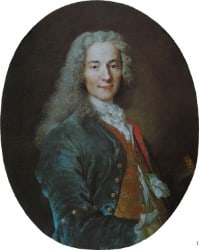
“To believe in God is impossible; but to not believe is absurd.”

Voltaire

Topics: ,

“Love is the very essence of life. It is the pot of gold at the end of the rainbow. Yet it is not found only at the end of the rainbow. Love is at the beginning also, and from it springs the beauty that arched across the sky on a stormy day. Love is the security for which children weep, the yearning of youth, the adhesive that binds marriage, and the lubricant that prevents devastating friction in the home; it is the peace of old age, the sunlight of hope shining through death. How rich are those who enjoy it in their associations with family, friends, and neighbors! Love, like faith, is a gift of God. It is also the most enduring and most powerful virtue.”

Gordon B. Hinckley  |  Standing for Something: Ten Neglected Virtues That Will Heal Our Hearts and Homes

Topics: , ,

“In itself, doubt is neither good nor bad. Its value depends on what you do with it.”

Adam S. Miller  |  Letters to a Young Mormon

Topics: ,

“Why would God go out of his way to hide evidence and make his own (world-historically pivotal) message more obscure and less credible? Or even more to the point, what about God’s own absence? Why put us in the same weak position as Lehi? Why give us a text, at least twice removed from God himself, rather than give us some kind of direct interaction with God? Is this a game or a test? Is God just testing us to see if we’ll believe things that we don’t have good evidence for? If this is the case, then what is God testing for, credulity? Is credulity the measure of a life, the litmus test for salvation? In effect, is God saying, ‘You’re welcome to join me in eternal bliss, but only if you’re willing to believe (in exactly the right way) things that I intentionally and unnecessarily made it really hard to understand and believe?’ I don’t buy it. I don’t buy this version of the story.”

Adam S. Miller  |  Future Mormon, p. 21

Topics: , , ,

“I have come to know that faith is a real power, not just an expression of belief.”

Boyd K. Packer  |  These Things I Know, April 2013 General Conference

Topics:

“I think the greatest benefit that can be derived from an honest doubt is the recognition that in the final analysis, we choose to believe. For somebody who has seen that there are reasons to doubt and reasons to believe, and yet make a free choice to affirm their belief, you can see that that is a wonderful position to be in, to recognize that this is something I chose, it’s not something I was compelled by the evidence to accept. It’s something that out of a free heart I choose to embrace. Now, I think that that’s an advantage known only to those who have passed through the crucible of doubt.”

Terryl and Fiona Givens  |  The Crucible of Doubt

Topics: ,

I fear that in this world of skeptics and pragmatists we are losing the spirit of those wonderful scriptural phrases: “I will go and do;” “I know not save the Lord commandeth me;” or “for a wise purpose in him, which purpose I know not.” That’s the spirit of dedication, of commitment, of faith that we must show to the Lord as we go about our Father’s business in a significant way. This is how we say in our own lives, “Because I have been given much, I too must give.”

Stanley A. Peterson

Topics: ,

Image of Elizabeth Smart

“I also believe in faith. Faith in a loving and kind heavenly Father who will always care about me. Faith that my worth will never be diminished. Faith that God knows how I feel and that I can depend on him to help me through it all. I believe that God not only suffered for me, but that He will make everything up to me in His own time and His own way. That gives me the peace I need to feel like justice will win out in the end.”

Elizabeth Smart  |  My Story: Elizabeth Smart

Topics: , , ,

Our main task is to declare the gospel and do it effectively. We are not obligated to answer every objection. Every man eventually is backed up to the wall of faith, and there he must make his stand. (President Ezra Taft Benson)

Robert Millet  |  “What We Believe,” BYU Devotional, Feb. 3, 1998, p. 9

Topics: , ,

Richard G. Scott Portrait

President Harold B. Lee once said, “If you want the blessing, don’t just kneel down and pray about it. Prepare yourselves in every conceivable way you can in order to make yourselves worthy to receive the blessing you seek.”

Sometimes we tend to believe that if we have enough faith, anything can happen without our really putting forth much effort, without doing all that is possible, or without “running as hard as we can and praying on the run.” The Lord expects us to do all in our power as we exercise our faith.

How is this kind of faith developed? In Alma we read: “Now, as I said concerning faith – that it was not a perfect knowledge – even so it is with my words. Ye cannot know of their surety at first, unto perfection, any more than faith is a perfect knowledge.” Faith, then, is not a perfect knowledge. Alma goes on to say, “But behold, if ye will awake and arouse your faculties, even to an experiment upon my words, . . .” (Alma 32:26–27). — Elder Robert B. Harbertson, “The Eye of Faith,” New Era, September 1988, p. 4
To produce fruit, your trust in the Lord must be more powerful and enduring than your confidence in your own personal feelings and experiences.

Richard G. Scott  |  “Trust in the Lord,” Ensign, November 1995

Topics: ,

Richard G. Scott Portrait

“Faith is things which are hoped for and not seen; wherefore, dispute not because ye see not, for ye receive no witness until after the trial of your faith” (Ether 12:6). Thus, every time you try your faith – that is, act in worthiness on an impression – you will receive the confirming evidence of the Spirit. As you walk to the boundary of your understanding into the twilight of uncertainty, exercising faith, you will be led to find solutions you would not obtain otherwise. With even your strongest faith, God will not always reward you immediately according to your desires. Rather, God will respond with what in His eternal plan is best for you, when it will yield the greatest advantage. Be thankful that sometimes God lets you struggle for a long time before that answer comes. That causes your faith to increase and your character to grow.

Richard G. Scott  |  “The Transforming Power of Faith and Character,” Ensign, Nov. 2010, pp. 43-46

Topics:

Faith and knowledge require equal effort and commitment. We cannot expect to have faith at the center of our lives if all of our efforts are expended on knowledge, sports, hobbies, making money, or other pursuits.

Elder Quentin L. Cook  |  “Strengthen Faith as You Seek Knowledge,” Ensign, September 2008

Topics: , ,

Lucy Mack Smith, mother of the Prophet, was asked to take charge of the exodus of the members from Fayette [May 1831]. When they arrived at Buffalo, New York, they found that the harbor on Lake Erie was clogged with an ice field, and the steamboat carrying the Fayette Saints was unable to leave port. In this difficult situation, she called upon the members to exercise their faith: “Now, brethren and sisters, if you will all of you raise your desires to heaven, that the ice may be broken up, and we be set at liberty, as sure as the Lord lives, it will be done.” At that very moment a noise was heard “like bursting thunder.” The ice parted and a narrow passage formed through which the boat was able to move. They had barely passed through when the avenue again closed, but they were in open water and could continue their journey. Following this miraculous escape, the company was called together in a prayer meeting to offer up their thanks to God for his mercy on their behalf. (Lucy Mack Smith, History of the Church, 240)

Quorum of the Twelve Apostles  |  Our Heritage, a Brief History of The Church of Jesus Christ of Latter-day Saints, p. 19

Topics: ,

Neal A. Maxwell Headshot

One cannot have adequate faith in a Christ whom he does not adequately know, “who is a stranger . . . far from the thoughts and intents of his heart.” (Mosiah 5:13) Instead, by laying aside “every weight” of the world and the sins which so “easily beset us,” by looking unto Jesus and by feasting upon His words, we will be able to move forward with intellectual and spiritual vigor. Otherwise, as Paul said, we can become wearied and faint in our minds. (See Heb. 12:1–3; see also 2 Ne. 31:20.) When we understand what was revealed to Adam – “[my] plan of salvation unto all men” (Moses 6:62) – then these doctrines are keenly relevant for tomorrow’s trial, Tuesday’s temptation, or next month’s surge of self-pity. After all, chastening, the trial of our faith, and patience are part of the plan. (See Mosiah 23:21.) . . .

If sought by faith (see Rom. 9:30–32), these doctrines of the radiant restoration enclose us in divine purpose during our sojourn in this “far country.” Like the prodigal son who “came to himself,” we thus receive needed perspective and direction as we also begin to “arise and go to [our] Father.” (See Luke 15:11–32.) . .

We will not be strangers in the City of God. We were there before, when the morning stars sang together and the sons of God shouted for joy at the prospects of this stern but necessary mortal existence. (See Job 38:4–7.) . . .The trek will be proving and trying. Faith, patience, and obedience are essential (see Mosiah 23:21; Abr. 3:25), but he who completes the journey successfully will be immeasurably added upon. (See Abr. 3:26.) And he who does not will have subtracted from the sum of his possibilities. . . .

Doers, said Jesus, will know that these doctrines are of God. (See John 7:17.) Therefore, do not be surprised when nondoers scoff. Do not be surprised, either, if these doctrines unsettle some. Such was the case when the ancient Apostles filled Jerusalem with their doctrines. (See Acts 5:28.) And when Jesus focused His hearers on doctrines, “they were astonished at his doctrine.” (Matt. 22:33) The only cure for the doctrinal illiteracy of those who murmur will be to learn doctrine. (See Isa. 29:24)

Elder Neal A. Maxwell  |  “Called and Prepared from the Foundation of the World,” General Conference, April 1986

Topics:

Faith is not only a feeling; it is a decision. With prayer, study, obedience, and covenants, we build and fortify our faith. Our conviction of the Savior and His latter-day work becomes the powerful lens through which we judge all else. Then, as we find ourselves in the crucible of life, as Elder Oaks explained, we have the strength to take the right course.

President Hinckley said it this way: “When [an individual] is motivated by great and powerful convictions of truth, then he disciplines himself, not because of demands made by the Church but because of the knowledge within his heart.”

Are we sufficiently motivated by “great and powerful convictions of truth”? Do our choices reflect this motivation? Are we becoming who we want to become? It’s true, isn’t it? Then what else matters?

Elder Neil L. Andersen  |  “It’s True, Isn’t it? Then what else matters?” Ensign, May 2007

Topics: , ,