Decisions

LDS Quotes on Decisions

“It is interesting to me that one of the central elements of the word character is created by the letters A, C, and T. As we already have seen in the examples of Christ’s character from the New Testament, the nature and consistency of how one acts reveals in a powerful way his or her true character.”

Elder David A. Bednar  |  "The Character of Christ", Jan 25, 2003

Topics: , ,

Thomas S. Monson

“I can’t stress too strongly that decisions determine destiny. You can’t make eternal decisions without eternal consequences.

“May I provide a simple formula by which you can measure the choices which confront you. It’s easy to remember, sometimes difficult to apply: You can’t be right by doing wrong; you can’t be wrong by doing right. Your personal conscience always warns you as a friend before it punishes you as a judge.”

Thomas S. Monson  |  "Decisions Determine Destiny"

Topics: ,

Thomas S. Monson

“It has been said by one, years ago, that history turns on small hinges, and so do people’s lives. Our lives will depend upon the decisions which we make—for decisions determine destiny.”

Thomas S. Monson  |  "Decisions Determine Destiny"

Topics: ,

“My concern is not only about the big tipping-point decisions but also the middle ground—the workaday world and seemingly ordinary decisions where we spend most of our time. In these areas, we need to emphasize moderation, balance, and especially wisdom. It is important to rise above rationalizations and make the best choices.

“A wonderful example of the need for moderation, balance, and wisdom is the use of the Internet. It can be used to do missionary outreach, to assist with priesthood responsibilities, to find precious ancestors for sacred temple ordinances, and much more. The potential for good is enormous. We also know that it can transmit much that is evil, including pornography, digital cruelty,8 and anonymous yakking. It can also perpetuate foolishness. As Brother Randall L. Ridd poignantly taught at the last general conference, speaking of the Internet, “You can get caught up in endless loops of triviality that waste your time and degrade your potential.”

Elder Quentin L. Cook  |  "Choose Wisely"

Topics: , ,

Richard G. Scott Portrait

“You cannot today remotely imagine what that decision to be unwaveringly obedient to the Lord will allow you to accomplish in life. Your quiet, uncompromising determination to live a righteous life will couple you to inspiration and power beyond your capacity now to understand. To others, if an honest evaluation of your life reveals a continuing dependency on individuals or things that are not good, please listen. I sincerely want to help you. If you understand and use the principles we now review, they will bring you great reward.”

Richard G. Scott  |  "Making the Right Decisions"

Topics: ,

Thomas S. Monson

“Perhaps the renowned author Charles Dickens best described our day when he spoke of a period over two centuries ago. His classic A Tale of Two Cities begins: ‘It was the best of times, it was the worst of times, it was the age of wisdom, it was the age of foolishness, it was the epoch of belief, it was the epoch of incredulity, it was the season of Light, it was the season of Darkness, it was the spring of hope, it was the winter of despair, we had everything before us, we had nothing before us.’

“This is your world. The future is in your hands. The outcome is up to you. The way to exaltation is not a freeway featuring unlimited vision, unrestricted speeds, and untested skills. Rather, it is known by many forks and turnings, sharp curves, and controlled speeds. Your driving skill will be put to the test. Are you ready? You are driving. You haven’t passed this way before. Fortunately, the Master Highway Builder, even our Heavenly Father, has provided a road map showing the route to follow. He has placed markers along the way to guide you to your destination.”

Thomas S. Monson  |  "Decisions Determine Destiny"

Topics:

“We want a script, and we find we stand before a blank canvas. We expect a road map, and we find we have only a compass. We have yet to learn, as the poet John Ciardi wrote, that ‘clean white paper, waiting under a pen, is a gift beyond human history and hurt and heaven.”

Terryl and Fiona Givens

Topics: , , ,

“I am not a product of my circumstances. I am a product of my decisions.”

Stephen R. Covey

Topics: ,

Thomas S. Monson

“I believe that among the greatest lessons we are to learn in this short sojourn upon the earth are lessons that help us distinguish between what is important and what is not.”

Thomas S. Monson  |  "Finding Joy in the Journey"

Topics: ,

Richard G. Scott Portrait

“In time, one who makes decisions based upon circumstance is virtually assured to commit serious transgressions. There is no iron rod of truth to keep that person in the right way. He will continually be faced with many subtle temptations to make deviations from the commandments. Those choices are justified by arguing that they are not that bad, that they are more socially acceptable and provide a broader base of friends. A clever individual without foundation principles can at times acquire, temporarily, impressive accomplishments. Yet that attainment is like a sand castle. When the test of character comes, it crumbles, often taking others with it.

“The second pattern, making decisions based upon eternal truth, is the pattern of the Lord. It will always lead you to make decisions guided by His plan of happiness. Such decisions are centered in doing what is right, not in first deciding the result desired. Choosing to do what the Lord has defined as right will, in the long run, always lead to the best outcomes. However, that pattern may require you to set aside something you very much desire now for a greater future good.”

Richard G. Scott  |  "The Power of Righteousness"

Topics: , ,

“A good character is something you must make for yourself. It cannot be inherited from parents. It cannot be created by having extraordinary advantages. It isn’t a gift of birth, wealth, talent, or station. It is the result of your own endeavor. It is the reward that comes from living good principles and manifesting a virtuous and honorable life.”

L. Tom Perry  |  "The Tradition of a Balanced, Righteous Life", August 2011 Ensign

Topics: , ,

“We are the creative force of our life, and through our own decisions rather than our conditions, if we carefully learn to do certain things, we can accomplish those goals.”

Stephen R. Covey  |  Seven Habits of Highly Effective People

Topics: , ,

All of our decisions will not be perfect. We will feel hopefully only temporarily, regret. But let us never wait for perfect clarity. It will be a rare decision indeed when all of the data in perfect clarity is apparent before the decision is made. Some of our greatest growth comes from the mind stretching exercise of filling in where information is not available and weighing that which is incomplete. Sometimes there must simply be a leap of faith.

Hugh W. Pinnock  |  “Decisions Determine Our Destiny,” February 6, 1981

Topics: , , , ,

“Neutrality is a nonexistent condition in this life. We are always choosing, always taking sides. That is part of the human experience – facing temptations on a daily, almost moment-by-moment basis – facing them not only in good days but on days we are down, the days we are tired, rejected, discouraged, or sick.”

Tad R. Callister  |  The Infinite Atonement

Topics: ,

“Generally our Heavenly Father will not interfere with the agency of another person unless He has a greater purpose for that individual. Two examples come to mind: Saul, who became the Apostle Paul, and Alma the Younger. Both these men were deterred from their unrighteous objective of persecuting and trying to destroy the church of God. Both became great missionaries for the Church. But even as the Lord intervened, they were given choices. Alma, for example, was told, ‘If thou wilt be destroyed of thyself, seek no more to destroy the church of God.’”

Marvin J. Ashton  |  “Know He Is There,” Ensign, February 1994, p. 54

Topics: ,

“You are responsible for the choices you make. You should not blame your circumstances, your family, or your friends if you choose to disobey God’s commandments. You are a child of God with great strength. You have the ability to choose righteousness and happiness, no matter what your circumstances.”

For the Strength of Youth

Topics: ,

“Sometimes it feels like we are drowning in frivolous foolishness, nonsensical noise, and continuous contention. When we turn down the volume and examine the substance, there is very little that will assist us in our eternal quest toward righteous goals. One father wisely responds to his children with their numerous requests to participate in these distractions. He simply asks them, “Will this make you a better person?”

“When we rationalize wrong choices, big or small, which are inconsistent with the restored gospel, we lose the blessings and protections we need and often become ensnared in sin or simply lose our way.

“I am particularly concerned with foolishness and being obsessed with “every new thing.” In the Church we encourage and celebrate truth and knowledge of every kind. But when culture, knowledge, and social mores are separated from God’s plan of happiness and the essential role of Jesus Christ, there is an inevitable disintegration of society. In our day, despite unprecedented gains in many areas, especially science and communication, essential basic values have eroded and overall happiness and well-being have diminished.”

Elder Quentin L. Cook  |  "Choose Wisely"

Topics: , ,

“Exercising agency in a setting that sometimes includes opposition and hardship is what makes life more than a simple multiple-choice test. God is interested in what we are becoming as a result of our choices. He is not satisfied if our exercise of moral agency is simply a robotic effort at keeping some rules. Our Savior wants us to become something, not just do some things. He is endeavoring to make us independently strong – more able to act for ourselves than perhaps those of any prior generation. We must be righteous, even when He withdraws His Spirit, or, as President Brigham Young said, even ‘in the dark.’”

Elder D. Todd Christofferson  |  “Moral Agency,” Ensign, June 2009, p. 53

Topics: , ,

“God wants to give us something, but cannot, because our hands are full — there’s nowhere for Him to put it.”

St. Augustine  |  "City of God"

Topics: , ,

Elder Jeffery R. Holland of the LDS church

God doesn’t care nearly as much about where you have been as He does about where you are and, with His help, where you are willing to go.

Elder Jeffrey R. Holland  |  Created for Greater Things

Topics: , , , , , , , , , , , , , , ,

Richard G. Scott Portrait

“Real joy comes from righteous character, and that is built from a pattern of consistent righteous decisions. When the things that you acquire are used as tools to help others, they won’t rule your life. Your righteous decisions determine who you are and what is important to you. They make doing the right things easier. For happiness now and throughout your life, steadfastly obey the Lord, no matter what pressure you feel to do otherwise.”

Richard G. Scott  |  "Making the Right Decisions"

Topics: , , , , ,

Thomas S. Monson

“What are the three most important decisions? First, what will be my faith? Second, whom shall I marry? Third, what will be my life’s work?”

Thomas S. Monson  |  "Decisions Determine Destiny"

Topics: , , , ,

“Life offers you two precious gifts. One is time, the other, freedom of choice—the freedom to buy with your time what you will. You are free to exchange your allotment of time for thrills. You may trade it for base desires. You may invest it in greed. You may purchase with it vanity; you may spend your time in pursuit of material things. Yours is the freedom to choose. But these are not bargains, for in them you find no lasting satisfaction.”

Richard L. Evans

Topics: , , ,

Elder Dieter F. Uchtdorf

What we love determines what we seek. What we seek determines what we think and do. What we think and do determines who we are — and who we will become.

Elder Dieter F. Uchtdorf  |  The Love of God

Topics: , , ,

While I was serving as the president of Brigham Young University–Idaho, Elder Jeffrey R. Holland came to the campus in December 1998…As our time together was drawing to a close, I asked Elder Holland, “If you could teach these students just one thing, what would it be?”

He answered:

“We are witnessing an ever greater movement toward polarity. The middle-ground options will be removed from us as Latter-day Saints. The middle of the road will be withdrawn.

“If you are treading water in the current of a river, you will go somewhere. You simply will go wherever the current takes you. Going with the stream, following the tide, drifting in the current will not do.

“Choices have to be made. Not making a choice is a choice. Learn to choose now.”

Elder David A. Bednar  |  "We Will Prove Them Herewith"

Topics: ,

“The man without a purpose is like a ship without a rudder—a waif, a nothing, a no man. Have a purpose in life, and, having it, throw such strength of mind and muscle into your work as God has given you.”

Thomas Carlyle

Topics: , , ,

Elder Dieter F. Uchtdorf

“You have agency, and you are free to choose. But there is actually no free agency. Agency has its price. You have to pay the consequences of your choices.”

Elder Dieter F. Uchtdorf  |  On the Wings of Eagles, BYU Devotional, July 2006

Topics: , ,

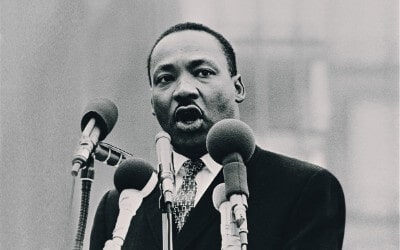
I have decided to stick to love… Hate is too great a burden to bear.

Martin Luther King, Jr.  |   A Testament of Hope: The Essential Writings and Speeches

Topics: , ,

Thomas S. Monson

“Some foolish persons turn their backs on the wisdom of God and follow the allurement of fickle fashion, the attraction of false popularity, and the thrill of the moment. Their course of conduct so resembles the disastrous experience of Esau, who exchanged his birthright for a mess of pottage.

“To illustrate, may I share with you the results of a survey conducted by a reputable organization and reported in a national magazine.2 The survey was entitled, “Would You, for Ten Million Dollars?” Let me ask you the same questions which were asked in the survey:

For 10 million dollars in cash, would you leave your family permanently?
Would you marry someone you didn’t love?
Would you give up all your friends permanently?
Would you serve a year’s jail term on a framed charge?
Would you take off your clothes in public?
Would you take a dangerous job in which you had a 1-in-10 chance of losing your life?
Would you become a beggar for a year?

“Of the people polled, 1 percent would leave their families, 10 percent would marry lovelessly, 11 percent would give up friends, 12 percent would undress in public, 13 percent would go to jail for a year, 14 percent would take the risky job, and 21 percent would beg for a year.

“Where money, rather than morality, dictates one’s actions, one is inclined away from God. Turning away from God brings broken covenants, shattered dreams, vanished ambitions, unfulfilled expectations, crushed hopes, and ruined lives.”

Thomas S. Monson  |  "Decisions Determine Destiny"

Topics: , ,

“The decisions we make, individually and personally, become the fabric of our lives. That fabric will be beautiful or ugly according to the threads of which it is woven. I wish to say particularly to the young men who are here that you cannot indulge in any unbecoming behavior without injury to the beauty of the fabric of your lives. Immoral acts of any kind will introduce an ugly thread. Dishonesty of any kind will create a blemish. Foul and profane language will rob the pattern of its beauty.”

Gordon B. Hinckley  |  "This Work Is Concerned with People," Conference, April 1995

Topics: , ,

“Let me spend a moment on an item that I think a great many people, particularly members of the Church, do not understand. A lot of our people–including a lot of you–have great amounts of faith but sometimes tend to distort that faith a little by saying, “I am not going to move until I receive a positive assurance”–a burning in the bosom, as it were–“that that is the right thing to do.”

“You are all familiar with the scripture where Oliver Cowdery was trying to translate and could not do it. The Lord explained that Oliver had to figure it out himself, and if it was right He would give him a burning in his bosom; and if it was wrong he would have a stupor of thought. Many people say, “I am not going to move because I do not have that burning in my bosom. I am not positive about this, that, or the other . . . .” Too often we want to be positive about everything. We feel that we need to have this burning all the time. Often people say, “I am confused. I don’t know what to do”–and so they end up treading water and not doing anything, not making any real progress–and that, in and of itself, is a great sin. We should not do things wrong–and, as I said before, the Lord will let you know when things are wrong–but, for heaven’s sake, we should do something! This lengthening of our stride and quickening of our pace about which our modern-day prophet, the Lord’s spokesman, talks so much cannot happen if we are standing still. We must be moving, and we should be moving in the right direction.

“Let me tell what I have discovered–and this is somewhat repetitious. I do not say that we will not get that burning in our bosom, for we will when it is the right thing. In my life there have been quite a few occasions where there was absolutely no question about it–that burning was there. For instance, I have had the experience of installing stake presidents when there was absolutely no question, when I was positive that “that is the man to be the stake president now.” It has happened in other situations also, but generally it has worked the other way–that is by eliminating the wrong directions to reveal the right direction, especially concerning our opportunities for progress in life in what we often term the temporal sense. We must try to figure it out ourselves. In the past I have tried out whether I should go into business or into teaching or into the arts or whatever. As I have begun to proceed along one path, having more or less gathered what facts I could, I have found that if that decision was wrong or was taking me down the wrong path–not necessarily an evil one, but one that was not right for me–without fail, the Lord has always let me know just this emphatically: “That is wrong; do not go that way. That is not for you!””

John H. Groberg  |  What is Your Mission, BYU Devotional Address, May 1979

Topics: , ,

“I have been impressed with the urgency of doing. Knowing is not enough; we must apply. Being willing is not enough; we must do.”

Leonardo da Vinci

Topics: , ,

Richard G. Scott Portrait

“What do you do when you do not feel an answer? I have come to thank the Lord with all my heart when that occurs, for it is an evidence of his trust. I positively know that as we apply our decision as though it were confirmed powerfully from on high, one of two things will certainly occur at the appropriate time: either the stupor of thought, or the peace – the confirmation.”

Richard G. Scott  |  Truth, BYU Devotional Address 6/78.

Topics: , ,

“The more often [one] feels without acting, the less [one] will be able ever to act, and, in the long run, the less [he or she] will be able to feel.”

CS Lewis  |  The Screwtape Letters (New York: Macmillan, 1966), 61.

Topics: ,

“We are not born into this world with fixed habits. Neither do we inherit a noble character. Instead, as children of God, we are given the privilege and opportunity of choosing which way of life we will follow-which habits we will form. Confucius said that the nature of men is always the same. It is their habits that separate them. Good habits are not acquired simply by making good resolves, though the thought must precede the action. Good habits are developed in the workshop of our daily lives. It is not in the great moments of test and trial that character is built. That is only when it is displayed. The habits that direct our lives and form our character are fashioned in the often uneventful, commonplace routine of life. They are acquired by practice.”

Delbert L. Stapley  |  Good Habits Develop Good Character, Ensign, Nov. 1974, 20

Topics: , ,

“The kind of life you live, your disposition, your very nature, will be determined by your thoughts, of which your acts are but the outward expression. Thought is the seed of action.”

David O. McKay  |  Teachings of Presidents of the Church: David O. McKay, 23: Developing a Christlike Character

Topics: ,

Neal A. Maxwell Headshot

“Though of themselves life’s defining moments may seem minor, our wise responses can gradually increase our traction on the demanding path of discipleship. For instance, we can decide daily, or in an instant, in seemingly little things, whether we respond with a smile instead of a scowl, or whether we give warm praise instead of exhibiting icy indifference. Each response matters in its small moment. After all, moments are the molecules that make up eternity, affecting not only ourselves but others, because our conduct even in seemingly small things can be contagious.”

Elder Neal A. Maxwell  |  The Promise of Discipleship, pg. 71

Topics: ,

“The right to make a decision, then, is now ours, and it is the greatest asset we have on earth. The Lord will not, and cannot, and does not intend to take it away from us. He intends for us to use it. He is constantly advising us and teaching us how to use it for our own good and further growth, even to attain eternal life.”

Eldred G. Smith  |  "Decisions"

Topics: ,

“Notwithstanding the fact that through its misuse, political, economic, and personal liberty are lost, free agency will always endure because it is an eternal principle. However, the free agency possessed by any one person is increased or diminished by the use to which he puts it. Every wrong decision one makes restricts the area in which he can thereafter exercise his agency. The further one goes in the making of wrong decisions in the exercise of free agency, the more difficult it is for him to recover the lost ground. One can, by persisting long enough, reach the point of no return. He then becomes an abject slave. By the exercise of his free agency, he has decreased the area in which he can act, almost to the vanishing point.”

Marion G. Romney  |  “The Perfect Law of Liberty,” Ensign, Nov. 1981, p. 45

Topics: , ,

“All that is not eternal [is] too short, [and] all that is not infinite [is] too small.”

Anonymous  |  Inscription on the east transept wall of Stanford University Memorial Church

Topics: , ,